Filmmakers and Photographer Share the Power of Listening to All Points of View




It seemed like the future all the dystopian novels foresaw — the end of the world was near. We were besieged by a plague that was killing millions. People were divided over everything from political views to how to respond to the disease; they debated the meaning of truth as others were murdered by police. A tense presidential election was underway, and people were out in the streets, expressing their rage.
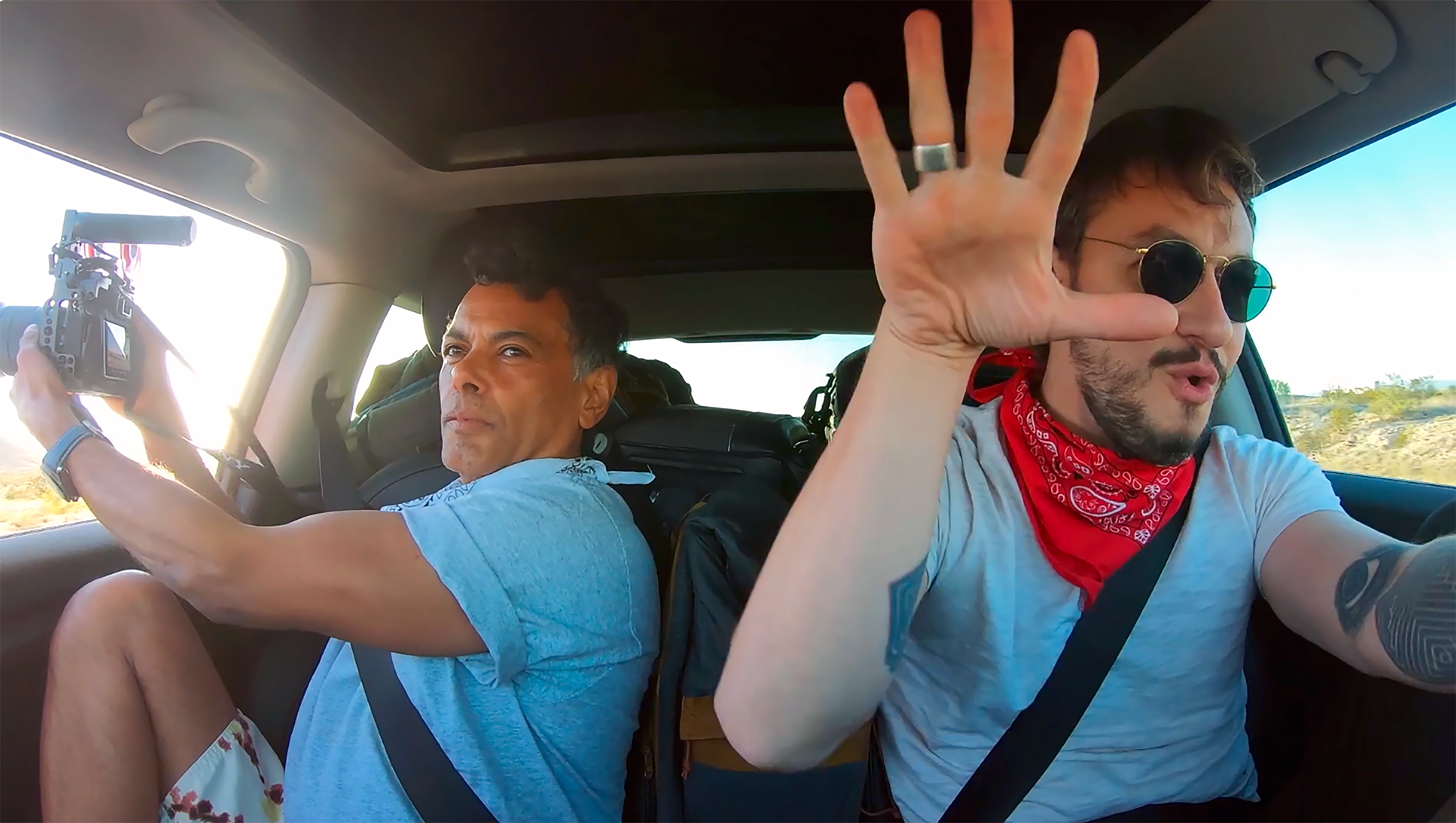
It was 2020 and to cope with the fear, filmmakers Horacio Marquinez and Kirill Myltsev piled their gear into a Mini Cooper and drove east from Los Angeles. The two immigrants — one from Panama and the other from Russia -- had just met in a yoga class. We learn in their film, America Unfiltered: Portraits and Voices of a Nation, that Myltsev, living out of his car as he tried to establish his career in a new country, attended yoga because it was a place where he could shower. Marquinez, learning that Myltsev was a film editor, texted to see if he wanted to drive to New York. That night, they began laying out the plan.
The film will be screened at the Arts Council of Princeton Saturday, February 14, at 1 p.m., as part of the exhibition of the same name, featuring Marquinez’s black-and-white portraits from that journey.
Their goal was to record conversations about what it means to be an American today. It was supposed to take three months, but as the story unfurled, it wound up taking nine months to birth. Marquinez had set a goal of 2,020 photographs; he ended up with five times as many.
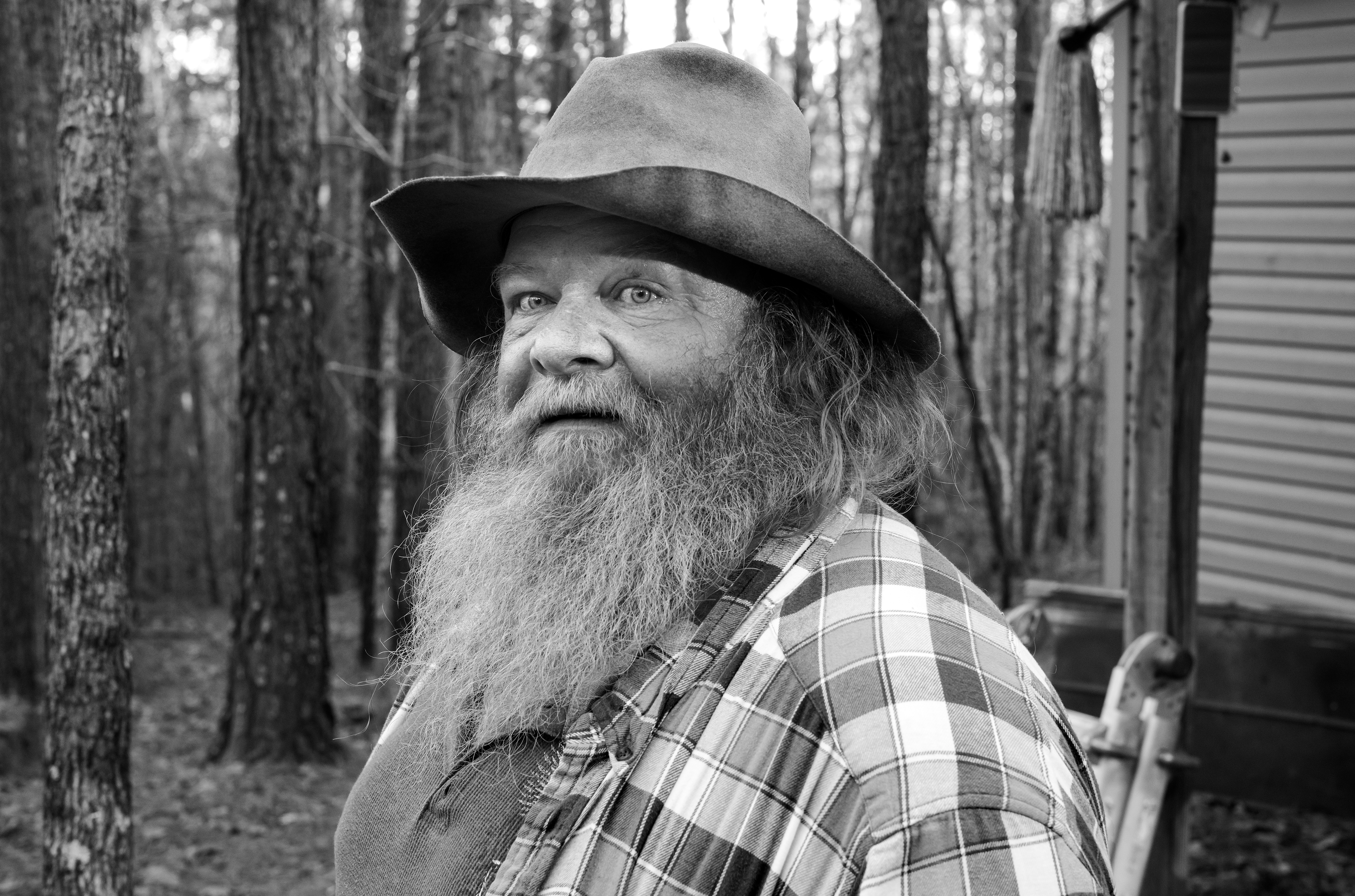
It’s a road trip movie and it’s a bromance (though Marquinez and Myltsev are not romantic partners) with beautiful vistas: a road meandering along a plane with craggy mountains on the horizon. We meet rough-edged characters from rural America that we on the East Coast would likely never encounter, from conspiracy theorists to the mothers of men who were murdered for no reason. Black-and-white portraits are interspersed throughout, like a pause to the action. Behind the lens their rough edges become soft as they open their hearts and bare their souls.
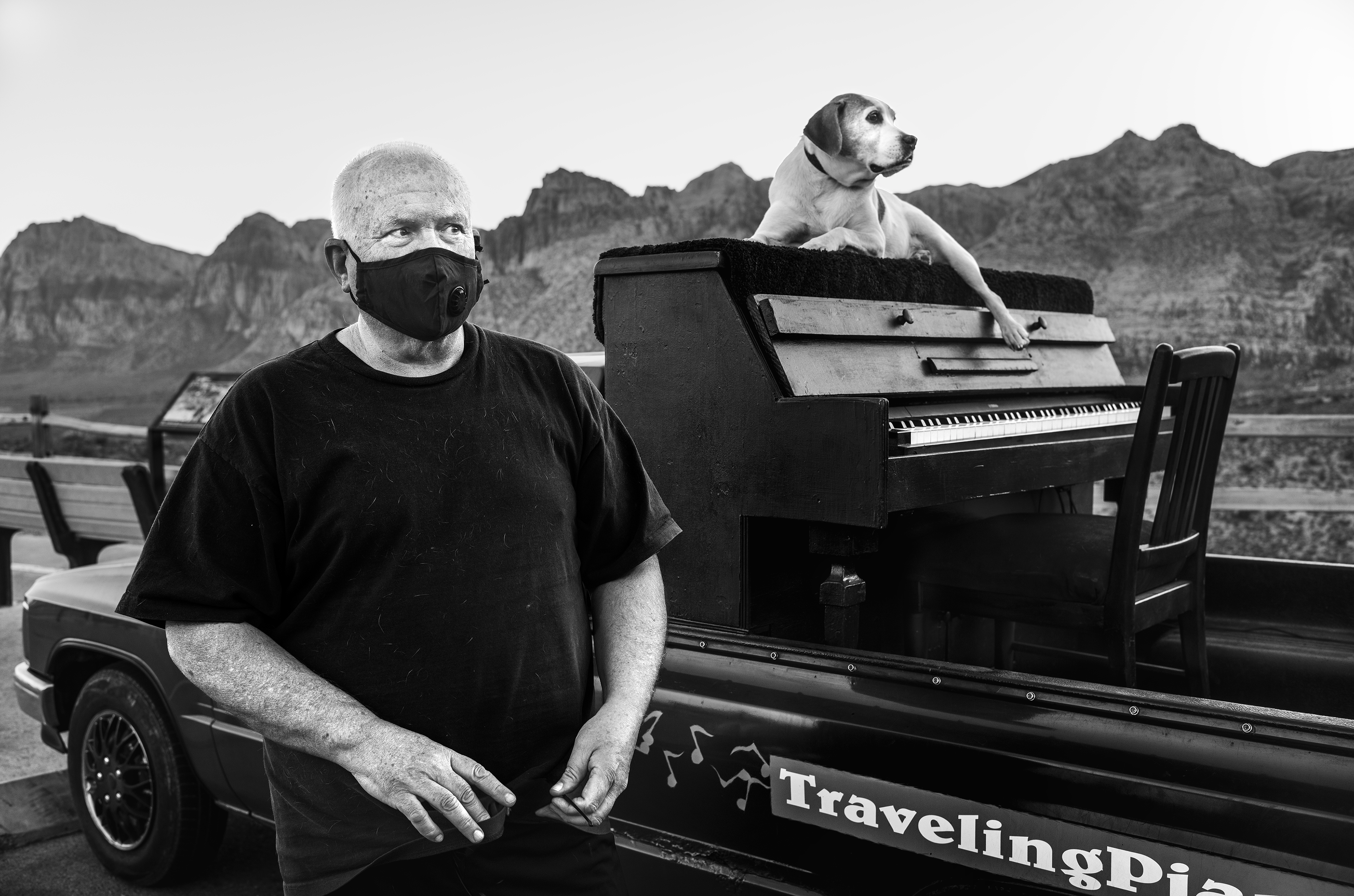
We meet a Zuni potter who tells us how, after losing his mother, he was so despondent he wanted to kill himself, but he found pottery and it made him want to live. A piano player who takes his piano and dog in a pickup truck across the Southwest tells us how, as a gay man raised in a fundamentalist world, he wanted to kill himself, and then “I learned a technique that empowered people to make their own music in less than 60 seconds. I went out to share this with people without an agenda, and it works. And by doing that I found my way into humanity.”
An Iraq War veteran says he doesn’t know what it means to be an American; no one ever asked him that. And a gun shop owner talks about how he got started in guns through his father, who struggled with alcohol and drugs; he started the shop to make the old man happy. As he recounts how his father was a “kind of jerk on top of it” who disowned him many times, tears well in his eyes. In the end the gun shop owner thanks the filmmakers, who unabashedly expressed their differing perspectives, “for your good service in sharing people’s views.” They part, hugging.
How did Marquinez and Myltsev find such characters? For the gun shop owner, they just wandered into his store. “The piano man found us,” Marquinez says. “We wanted to go deep – we didn’t want people you’d find on Google.” Some subjects led them to others. “We found them by following our hearts,” he continues.
How did they elicit such emotion? “By listening to their stories,” says Marquinez. “I didn’t know I had the capacity to listen without interrupting. I feel like doing that makes me useful.”
And while the filmmakers had prepared a long list of questions, they found it worked best to just let the conversations roll.
They were welcomed into homes, in churches, they were invited back from church for pizza, and they were even invited to Thanksgiving dinner. Marquinez says he never left feeling that their being immigrants, being gay, or traveling in a Mini Cooper with a California plate was held against them.
Marquinez and Myltsev are fun to be on the road with as they share their point of view, their humor, and silly scenes of themselves: loading their mountains of gear into the tiny vehicle (like that circus act of 20 clowns piling into a small car), lying in the middle of the road to get a good shot, applying moisturizer to elbows. We also get to see some of their disputes about which direction to take and sharing thoughts on the importance of listening and not debating. We hear Marquinez wax about how, as a cinematographer, he’s always had to help others create their dreams, and now he wants to pursue his own vision.
While in Austin, Texas, they get a call from their producer — who also happens to be the husband of Marquinez — telling them they might want to head to a Kamala Harris event in Jacksonville, 16 hours away. “She might be the next vice president,” we hear the voice on the phone.
The filmmakers change course, piling miles onto the odometer before encountering a hurricane and a flat tire along the way, then struggle to find a hotel that isn’t at capacity and will take them in. Back on the road, they learn that the Harris event has been cancelled due to a spike in Covid cases.
In an office where they are interviewing volunteers who are driving voters to the polls, Marquinez and Myltsev are required to have their temperature read. Marquinez tests high. “Maybe that’s why I was so not myself today,” he says to Myltsev, who drives the Mini Cooper.
“C’mon, you’re always like that.”
Marquinez now lives in New York and East Haddam, Connecticut; his husband, Marc Brackett, is a professor in the Child Study Center at Yale. Marquinez still drives the Mini Cooper, six years later, and recently drove to Princeton for the installation of his exhibition. He recounts how he first came to the U.S. in 1996 to earn his M.F.A. at Columbia film school. He met Brackett shortly thereafter, though they didn’t marry until 2015 after SCOTUS legalized marriage equality.
Myltsev, who also lives in New York these days and has a successful career in film editing, and Marquinez were so compatible that they’re planning their next project together.
“Questioning what it means to be an American is only a starting point,” says Myltsev, who edited the film. “We learned far more about what it means to be human.”


