Camille A. Brown & Dancers' 'I AM' Explores Black Joy





Five-time Tony Award-nominated choreographer Camille A. Brown is a visionary trailblazer best known for reclaiming cultural narratives through a historically informed repertory that blends tap, ballet, hip-hop, and modern dance. Her influence spans film, television, theater, and the opera stage, with notable credits including the Oscar-nominated film “Ma Rainey’s Black Bottom” and Broadway hits such as “Hell’s Kitchen,” “Choir Boy,” “Once On This Island,” and the 2025 revival of “Gypsy.”
In celebration of Black History Month, PEAK Performances at Montclair State University (MSU) will present Camille A. Brown & Dancers’ “I AM,” on Thursday, February 12, 2026, at 7:30 PM at the Alexander Kasser Theater. Since its 2024 world premiere at Jacob’s Pillow, “I AM” has experienced rapid acclaim. A 2025 production at The Joyce Theater earned a New York Times Critic’s Pick, highlighting Brown's signature interweaving of African diasporic dance forms. The technical excellence of “I AM” was further cemented by Bessie Award nominations for both choreography and sound design.
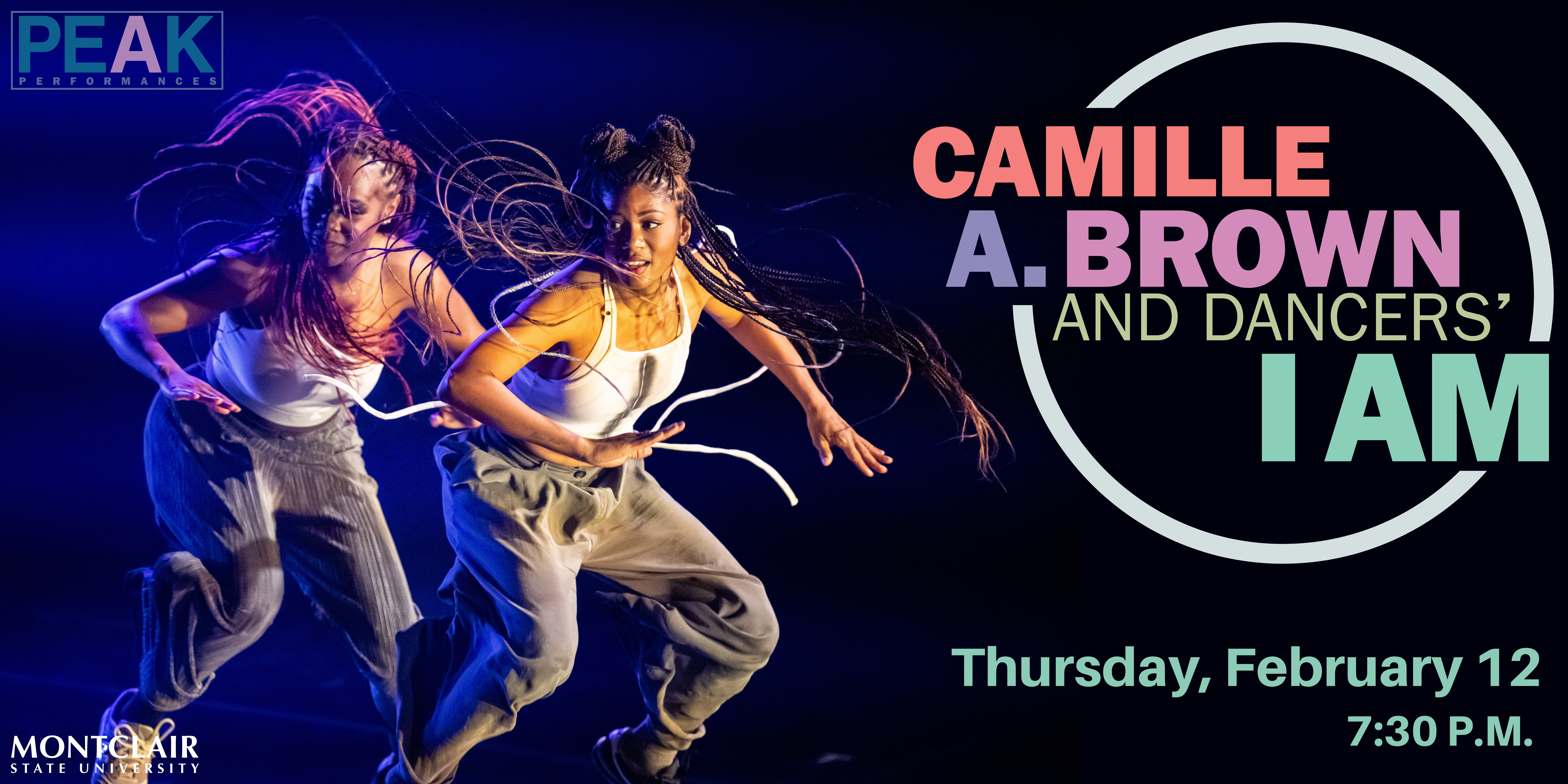
'I AM' advances Brown’s exploration of Black joy, cultural memory, and liberation.
While the piece is anchored by a live score, it reimagines ‘90s hits from artists such as Dru Hill, Lil’ Kim, Method Man, Busta Rhymes and Sounds of Blackness. Inspired by the HBO sci-fi, horror series “Lovecraft Country” and rhythmic energy of the film “Drumline,” Brown’s “I AM” investigates the boundless possibilities of the imagination while boldly investigating the future through powerful movement.
In “Lovecraft Country,” the episode “I AM” centers on Hippolyta Freeman (played by Aunjanue Ellis-Taylor), a Black woman living in 1950s Chicago who transforms from a suppressed housewife into a discoverer. A brilliant astronomer and mathematician, she uses a multidimensional portal to travel through time and space. Reclaiming parts of herself she had previously shrunk to fit societal norms, Hippolyta gains the power to name herself by declaring “I am” and transforming into a warrior, cosmic explorer, and dancer in a powerful act of self-definition.
“I was profoundly moved by the idea of naming yourself—how that looks and how that feels,” Brown shared in 2025, describing the core of her work. She uses the multiverse theme to demonstrate Black identity is complex and multifaceted, showing that individuals can embody multiple histories and futures while claiming the power to shape their destinies.
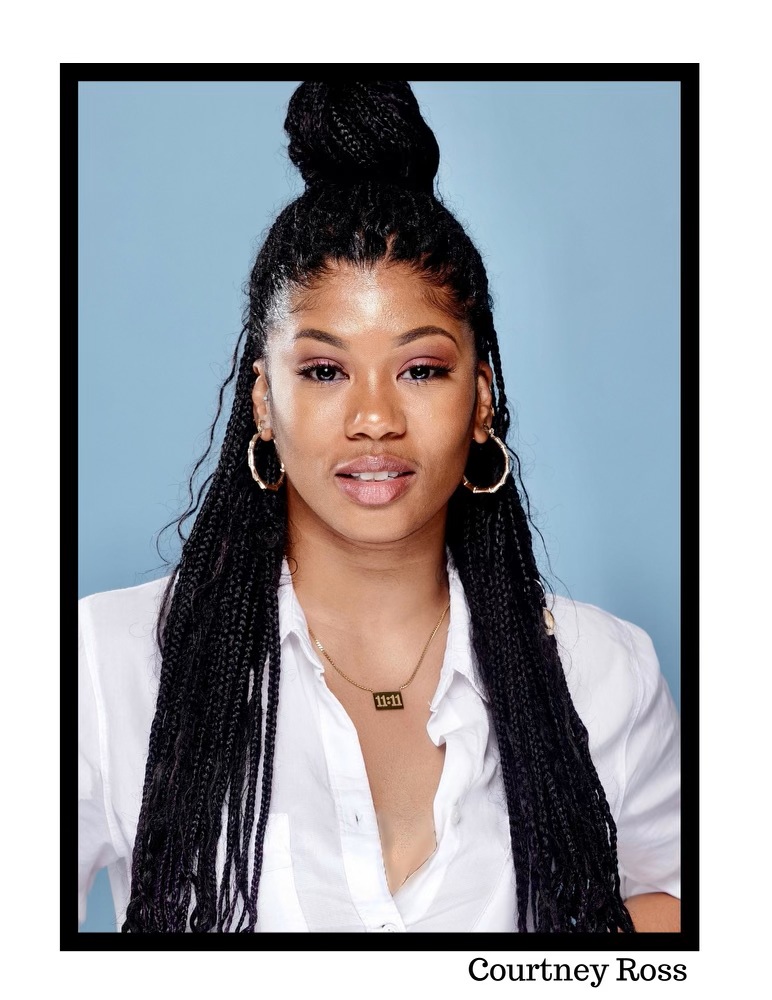
On stage, the solo dance, also called “I AM,” performed by Courtney Ross, begins in silence until a voice commands, “Name yourself. You are not in a prison.” Rising from the ground, Ross fights an invisible enemy with windmilling arms, flying fists and heart-taps, before settling into a single pose of quiet defiance. Ross describes it as a universal journey of self-liberation, resonating especially with Black women who confront internal “boxing rings” created by preconceived notions and self-doubt.
“I know a lot of women where we've all had this journey of self-discovery,” Ross says. “There's a moment when you realize that you've been keeping yourself boxed in by your own thoughts or other people’s perceived notions of who you are as a Black woman. You're constantly having to fight against perceptions or stereotypes.” Ross adds that the narrative of her solo shifts from defensive combat to radical self-acceptance. As the music flows into a liberational jam, the choreography evolves into a celebratory dance that embodies identity and freedom. “Instead of choosing to fight,” she explains, “I’m choosing to stand in who I am.”
Stepping into a role originally choreographed and performed by Brown, Ross was encouraged to personalize the solo, transforming it into a story of triumph. While the choreography’s foundation remains, Ross found her own rhythm and interpretation within its framework. “Where I might tilt my head this way, Camille might curtsy in a different way. So, we definitely have our own versions of the dance,” she adds.
A Visual Mixtape With Cultural References
Rather than following a linear plot, Ross notes that “I AM” is a production that unfolds as “a visual mixtape with each section acting as a distinct track evoking memories.” The work moves from the vibrant energy of a '90s music video to the cozy warmth of a grandmother’s kitchen, weaving together elements of the Black experience, including playground games and Samba-infused dances.
Ross highlights the section “MILKSHAKE” which focuses on beauty and reclaiming the Black female body. A woman moves fluidly across the stage in a solo but is framed and surrounded by two male dancers who embody a forceful yet supportive presence. Drawing inspiration from the legacy of Saartje Baartman—historically known as “Hottentot Venus”—and the ongoing objectification of Black women, the choreography transforms painful history into a rhythmic jamboree weaving Pattin’ Juba (Hambone) rhythms with Go-Go music. “Channeling,” co-choreographed by Ross, merges West African dance with modern social movement, a visceral invocation of the ancestors. Ross sees this section as an extension of “the hymns and humming of hope” passed down by Black women through generations of survival.
For Ross, a native of New Orleans, dance is a birthright. Her upbringing was steeped in the city’s Sunday second lining street dances and in mimicking '90s music videos. It was an encounter in the sixth grade when Ailey II visited her middle school that ignited a lifelong drive to dance professionally. A graduate of The Ailey School/Fordham University BFA program, Ross has been with Camille A. Brown & Dancers since 2019. Founded in 2006, the company is renowned for its theatrical storytelling and Social Dance for Social Change virtual school, which has empowered nearly 100,000 students.
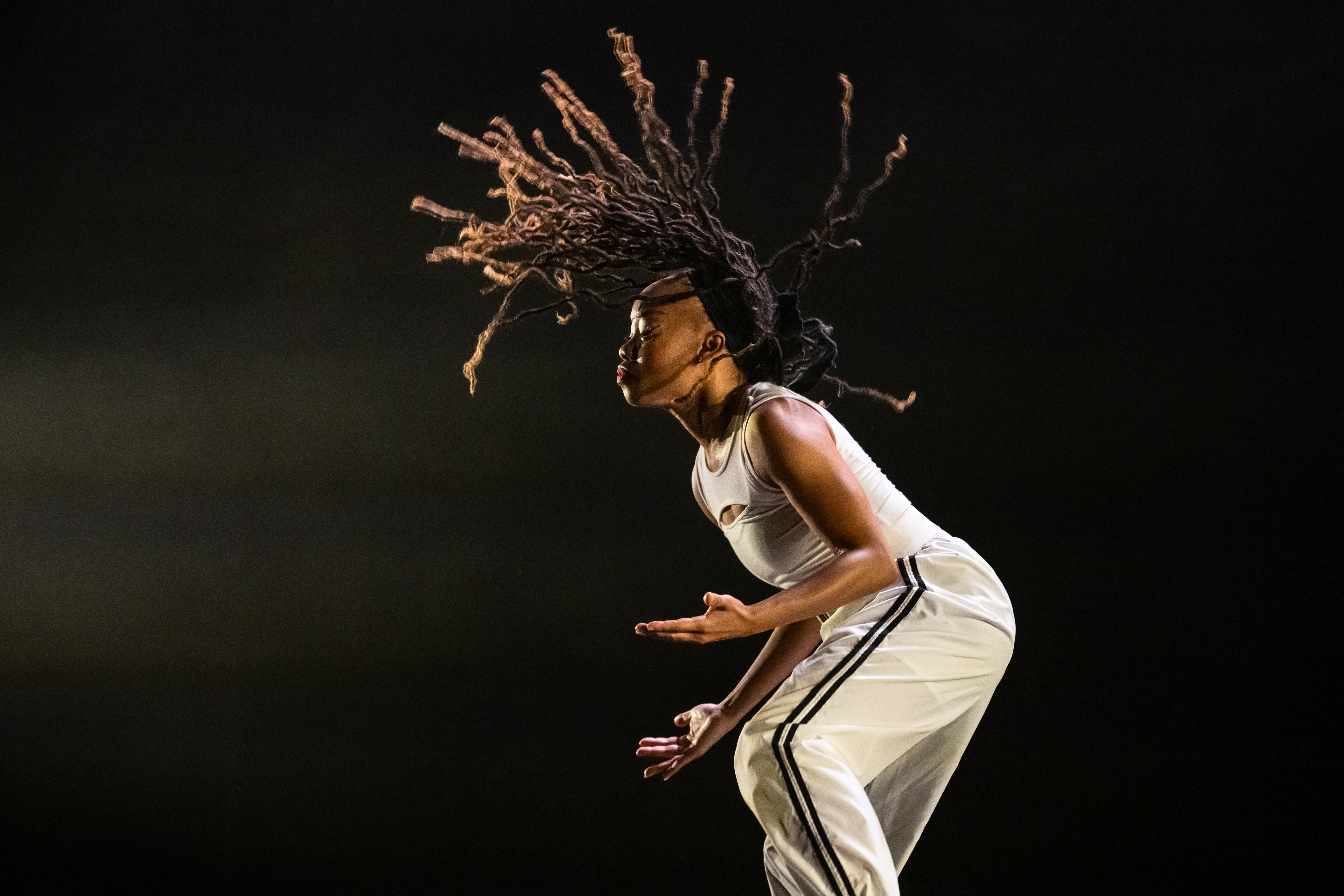
A Homecoming For Brown At PEAK Performances
Wiley Hausam, MSU’s Director of Arts + Cultural Programming, knew Brown’s work was “special” the moment he first saw “I AM” as a work-in-progress in early 2024. Hausam, who leads the university’s PEAK Performances series, selected the piece for the 2025-26 season. It was a natural choice, he says, citing its “brilliance and ferocious joy.” The piece “embodies the kind of celebration, resilience, and reclamation of happiness that we all need in this country right now,” he adds. “It’s passionate and life-affirming. This performance reminds you what live art can do, bring people together, spark conversation, and leave you feeling energized.”
This engagement marks Brown’s return to the Alexander Kasser Theater for the first time since her acclaimed 2017 performance, “ink.” For Hausam, “I AM” aligns with a mission to present world-class performances that are engaging, accessible, and relevant to both the university and local communities.
By fostering resonant narratives that motivate audiences, especially younger generations, to leave their homes and trade their screens for the stage, PEAK Performances continues to champion theater as a vital, high-energy space for shared human experiences. Throughout February, PEAK will present five different shows, including “I AM.” The lineup also includes a “Rent in Concert” performance and an evening with Tony Award-winning composer Jason Robert Brown.
Ultimately, “I AM” is more than a performance; it invites the audience to look inward and discover their own multidimensional portal as the dancers claim their joy and define their futures. “One reason to come to see “I AM” is that it doesn’t require you to be a contemporary dance (aficionado),” says Hausam. “The work will literally leap out and speak to you,” reminding us that the power to shape our own identities has always been within us.


