Calpulli Mexican Dance Company Brings Día de Muertos (Day of the Dead) to Life





Once a celebration largely associated with Mexico and parts of Central America, the Day of the Dead, or Día de (los) Muertos, has now gone mainstream all across America. This rich ancient tradition pays homage to the dearly departed by celebrating the lives of deceased family members through time-honored customs and rituals. Families welcome their loved ones back into their homes by preparing altars (ofrendas) decorated with marigold flower petals, candles, sugar skulls (calaveras), tissue-paper cutouts (papel picado), and photos of the deceased beside their favorite foods and drinks. Other customs involve visiting, cleaning, and decorating family graves. There’s even a day, October 27th, devoted to lost pets.
Blending dance with folk and classical music, the Calpulli Mexican Dance Company is bringing the Day of the Dead to life on stage. Calpulli will present its family-friendly “Día de Muertos” performance on Wednesday, October 15, 2025, at 7 PM, at the Grunin Center for the Arts in Toms River, NJ, and on Sunday, November 2, 2025, at 3:00 PM, at Rowan University’s Pfleeger Concert Hall in Glassboro, New Jersey, as a part of its Marie Rader Presenting Series.
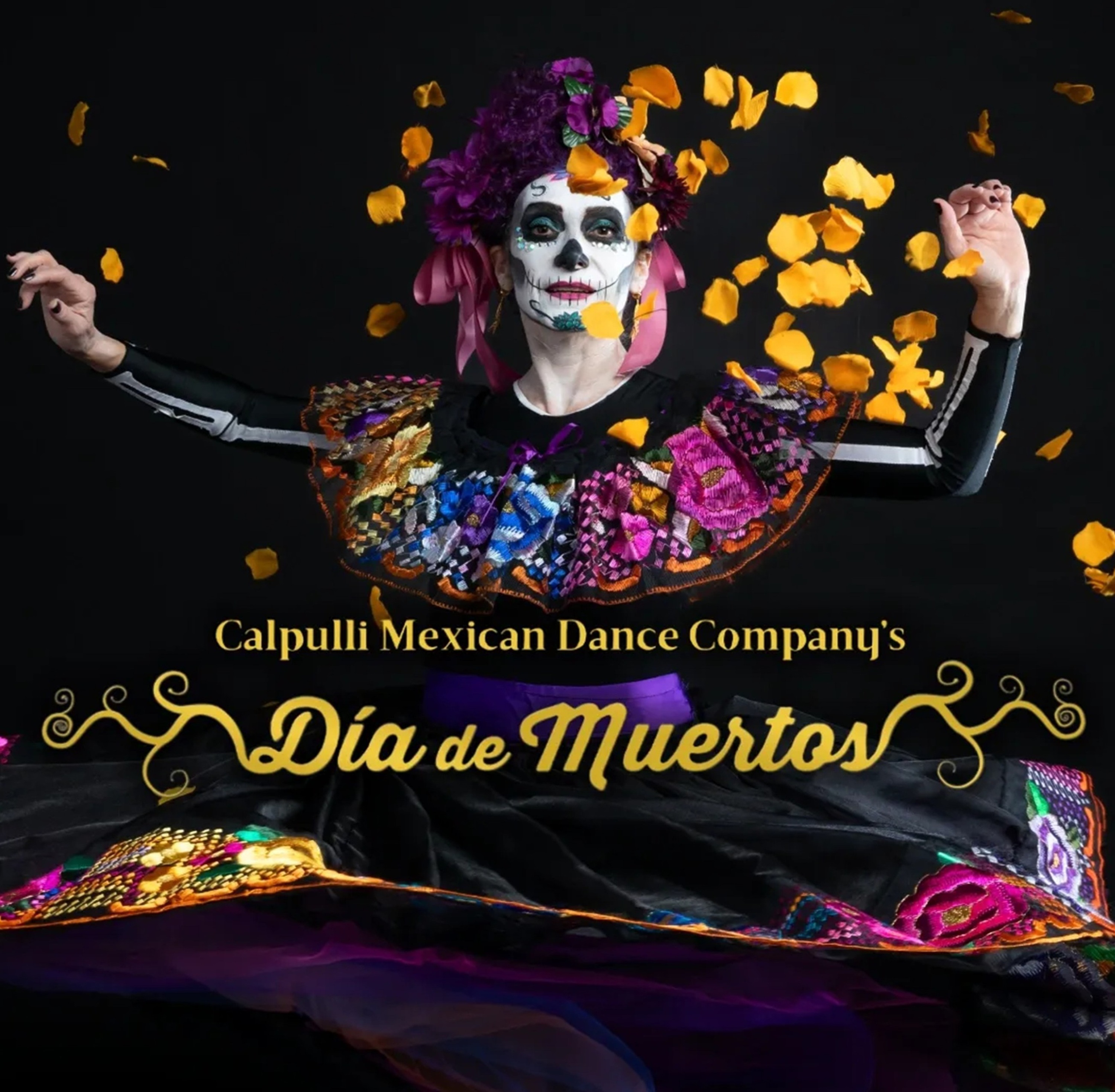
Calpulli's production of “Día de Muertos” is a captivating theatrical experience born from the fusion of live music, stunning choreography, elaborate costumes and spellbinding storytelling. This work has become a classic performance for the Calpulli Mexican Dance Company, making it a wonderful way to connect with audiences of all backgrounds.
“Día de Muertos” tells a love story set between the living and the dead. In a small Mexican town, a young couple, Lupita and Raúl, fall victim to treachery at the hands of a jealous and vengeful Maximiliano, the son of a wealthy family. His failed attempt to kill Raúl unintentionally leads to Lupita’s death. The tragic lovers are separated seemingly forever, never getting the chance to say goodbye. Lupita enters Mictlán, the underworld of the dead, where she meets its mesmerizing reigning queen, La Catrina. Overwhelmed by Lupita’s sadness, La Catrina allows her to return to the world of the living for one day to reunite with her beloved Raúl and to show that the two of them will be back together again in the afterlife.
Highlighting this year's production is choreographer and dancer Gabriela Garcia in the legendary role of La Catrina. The veteran performer is highly regarded for her work as a dance captain and ensemble member in the musical “Chicago” on Broadway, US tours, and the Vienna and Mexico City companies, where she played the iconic Velma Kelly. Delivering a fresh interpretation of the character La Catrina with masterful grace, beauty, and precision, Garcia will take audiences on a remarkable emotional journey in “Día de Muertos.”
Calpulli’s production of the show has evolved over the years. In fact, the original concept was a short piece called “Tiempo de Cempazuchitl” (Time of the Marigold), which premiered in 2004 at Queens Theatre in the Park. It was Calpulli’s then artistic director, Noemy Hernandez, who created the first full story-based production of “Día de Muertos” in 2012, which debuted at the Schimmel Center for the Arts at Pace University. In 2016, “Día de Muertos” premiered at Queens Theatre under the artistic direction of Calpulli’s co-founder Alberto Lopez alongside dramaturg and co-story writer Roberto Lara, with music direction by George Saenz.
Between the various renditions, “some of the characters and the choreography have changed,” says Juan Castaño, Calpulli’s co-founder and executive director. “The production has grown to be able to tell the story as clearly as possible with different cast sizes and elements. When Alberto took on the role of artistic director, he started working with Roberto Lara, our resident choreographer. What Roberto (contributed) was a version of the show that used classical ballet to tell a story about love and death.”
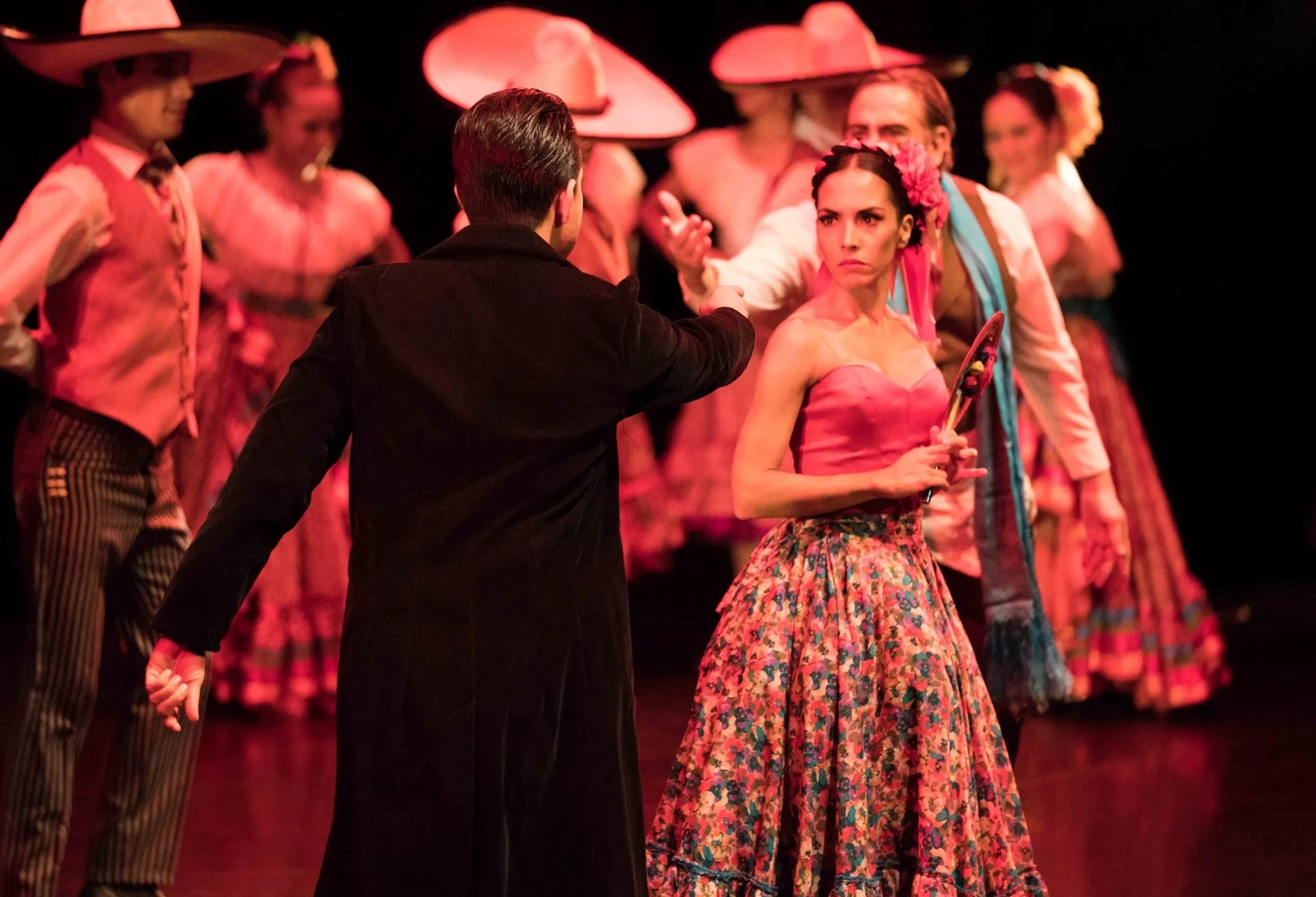
“In creating this story, it was very important to tell people about the traditions of Día de Muertos,” adds Lopez, who currently serves as Calpulli’s director of arts in education. “In 2016, it became a very popular celebration more than ever in the United States. It was very important for us to say, ‘this is the tradition, and we use the folklorically part and the technique of ballet to narrate the story.’ Also, we gave (ourselves) permission to create a unique storyline,” explains Lopez, who began his studies of Mexican folkloric dance at the age of 12, serving as dancer and choreographer with Grupo Folklórico de Greatneck, Don Juan Dancers, and the Ballet Folklórico Mexicano de Nueva York.
The songs and dance numbers were pieced together to build story that “no longer siloed to the region, genre or era that they would typically belong to, instead they were placed together to tell a different chapter, to present a different character, to bring the audience to a different place,” says Castaño, a trained dancer of Mexican folk traditions with over 20 years of experience. For example, he adds, “In Day of the Dead, there's a duel between the hero (Raúl ) and the villain (Maximiliano). And there's a very famous song from Central Mexico that translates to the fight of the roosters, “Pelea de Gallos.” It fits perfectly in the show. So, the movement between the two dancers is very much folkloric. It's based on this traditional dance. The storytelling around it with the cast (townspeople) pulls a little bit from classical ballet,” Castaño says. “One of the highlights of the performance is the goodbye song between the hero (Raúl ) and the heroine (Lupita). And that's set to a love song, “Amor Eterno” (Enteral Love), by Juan Gabriel. It's one of the most famous songs from Mexico. And the dance is set to a contemporary movement.”
A non-profit founded in New York City in 2003, Calpulli's repertoire and performances are a celebration of cultural legacy—past and present—telling stories that reflect Mexican and Mexican-American heritage using the universal languages of dance and music. Calpulli produces professional performances through its international touring company and designs arts-in-education programming.
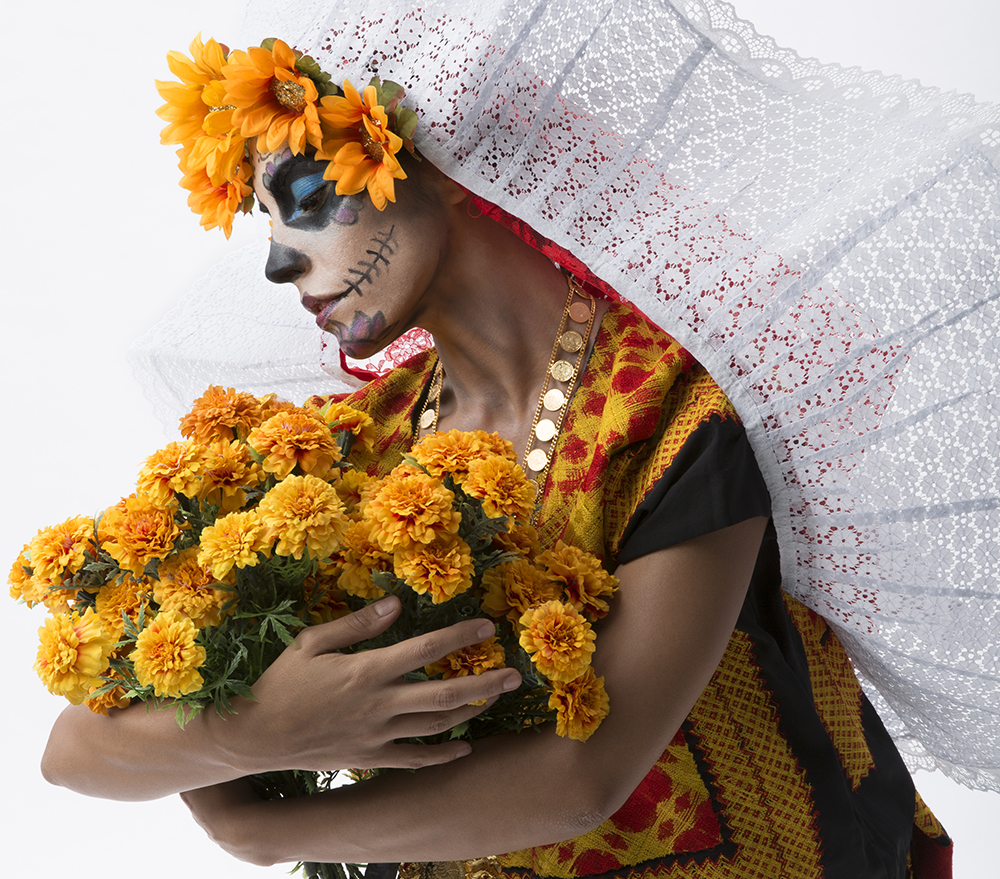
“We chose the name calpulli (pronounced cawl-pool-lee), which in the Mexica language, Nahuatl, is the meaning of house, a big house or family,” Lopez says. Calpulli is a growing family of dancers trained in diverse styles, classical and folk musicians, and teachers who contribute to communities across the nation.
The Company is proud to present the vibrant cultural traditions of Mexico and “Día de Muertos” to the Greater Southern New Jersey community via the Marie Rader Presenting Series at Rowan University. Established in 2008 through the Rowan Family Foundation, the series brings exceptional artists to the campus, enriching the university community and region through expanded performing arts programming.
“We embrace it as a Mexican tradition, knowing that it has its Indigenous roots and knowing it's a strong sentiment; the values behind the tradition of Día de Muertos are really universal. Anybody who's ever loved anybody who is no longer with them can connect to this story. And we hope that audiences, Hispanic, Latin American, and not, will give us an opportunity to show how much we have in common by attending this performance.”
Tickets are $39 for the performance of “Dia de Muertas” at the Grunin Center for the Arts and general admission is $30 ($25 for seniors) for the performance at Rowan University’s Pfleeger Concert Hall.


