Burlington Mayor Unveils Black History Memorabilia





A lifetime of history, culture, and personal family legacy has found a home at the Lyceum Hall Center for the Arts in Burlington, New Jersey. Through February 28, 2026, Burlington Township Mayor E.L. Pete Green is opening his personal vault of African American memorabilia to the public. For decades, he has sourced antiques and collectibles that tell a story of perseverance. The Black History Month exhibit offers an essential education on past events and the enduring spirit of African Americans — one artifact at a time. Mayor Green has curated a comprehensive collection that features figurines, photographs, news clippings, video footage, records, board games, children’s books, and various art pieces.
Lyceum Hall wishes to share a collective history.
Barbara Fisher, co-artistic director at Lyceum Hall, underscores the value of exposing all people, not just people of color, to this type of exhibit. She believes it is crucial to understand past events factually, without erasure or distortion of Black history. “Guests attending the exhibit often leave, learning something new, which is good. They are motivated to share what they’ve seen,” says Fisher. This process of “sharing our experiences and knowledge with others is essential,” she adds, as it helps broaden public awareness.
Fisher values the military section, which highlights African Americans' participation in World War I and World War II. “That might sound like a simple thing, but there are people who don't realize the significant contributions that were made by (Black soldiers),” she explains. While some aspects of the exhibit, particularly those related to the entertainment field, may be more widely known, Fisher notes that the collection offers an extensive and honest view. “This is not just African-American history. It’s American history,” she stresses.
Mayor Pete Green's journey to a public showcase.
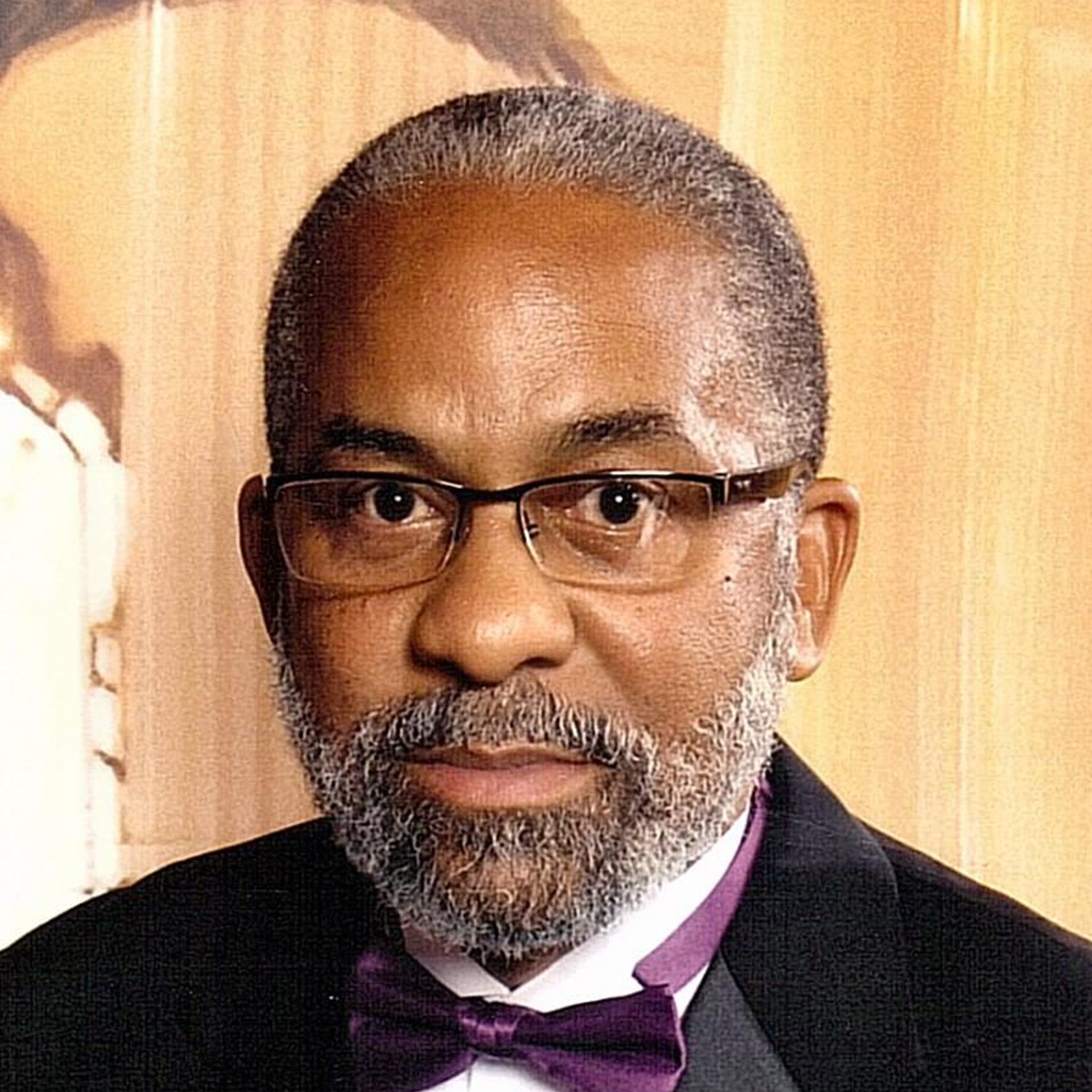
Mayor Green emphasizes the significance of preserving personal and generational items within his collection, many of which have been passed down through his family. Tracing their roots to Tuscaloosa, Alabama, Mayor Green’s family migrated north in the 1940s, eventually settling in Marion, Ohio, where he was born. He recalls how his grandparents kept him informed about life in the South and the nation at large. They did this through “Life,” “Look,” and “Ebony” magazines, “Saturday Evening Post” newspaper clippings, government documents, church programs, obituaries, and board games. All of which Mayor Green diligently saved over the years.
The collection extends to music history, with LPs and albums providing rich liner notes, artistic writings found on the covers or inner sleeves (liners) of the records. These liner notes featured lyrics, production credits, photographs, biographies, and narratives written by the artists themselves. “So, aside from listening to the album, you would read the liner notes and gather a lot of information and knowledge about the artist and the cultural context of the music,” he explains.
As he approaches the age of 70, the Mayor reflects on some six decades of collecting personal items and artifacts found at auctions, flea markets, and antique shops. The exhibit also features objects that he discovered serendipitously like limited-edition Black G.I. Joe dolls. He believes these artifacts are worth safeguarding for future generations.
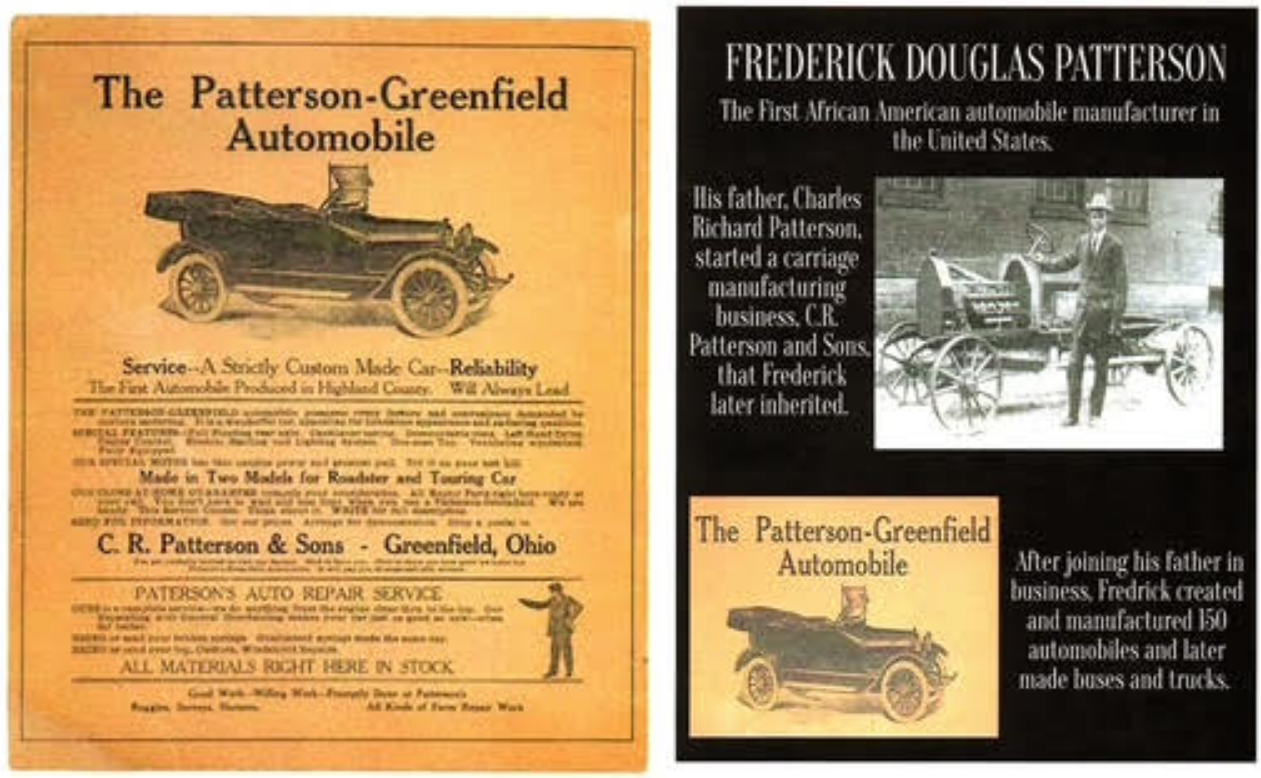
The exhibit balances playful rarities with milestones of American enterprise, such as images of C.R. Patterson & Sons, the first Black-owned automobile manufacturer. Founded by Charles Richard Patterson, who escaped slavery to become a master blacksmith, the company shifted from horsedrawn to horseless carriages under his son, Frederick Douglass Patterson. They hand-built 30-horsepower, four-cylinder vehicles between 1915 and 1918. Though the high-quality Patterson-Greenfield automobiles couldn't match the volume of Ford’s assembly lines, the firm successfully pivoted to manufacturing school buses and trucks, cementing C.R. Patterson & Sons’ legacy in American industry.
This profound realization, the inherent power of such historical truths, prompted the Mayor to refocus from collecting to curating. “I started organizing, framing, and making the collection accessible to the public,” says Mayor Green. This effort culminated in a showcase of his memorabilia at the Lyceum in 2025 in celebration of Black History Month.
For Mayor Green, this physical exhibit was a starting point. He maintains that Black history should be incorporated into general education and textbooks all year-round, rather than being confined to a designated single month. By acknowledging that the stories and achievements of Black Americans have often been overlooked, altered, or erased, he makes the case that this permanent preservation is not just a personal passion but a civic necessity.
Confronting caricature and reclaiming history through representation.
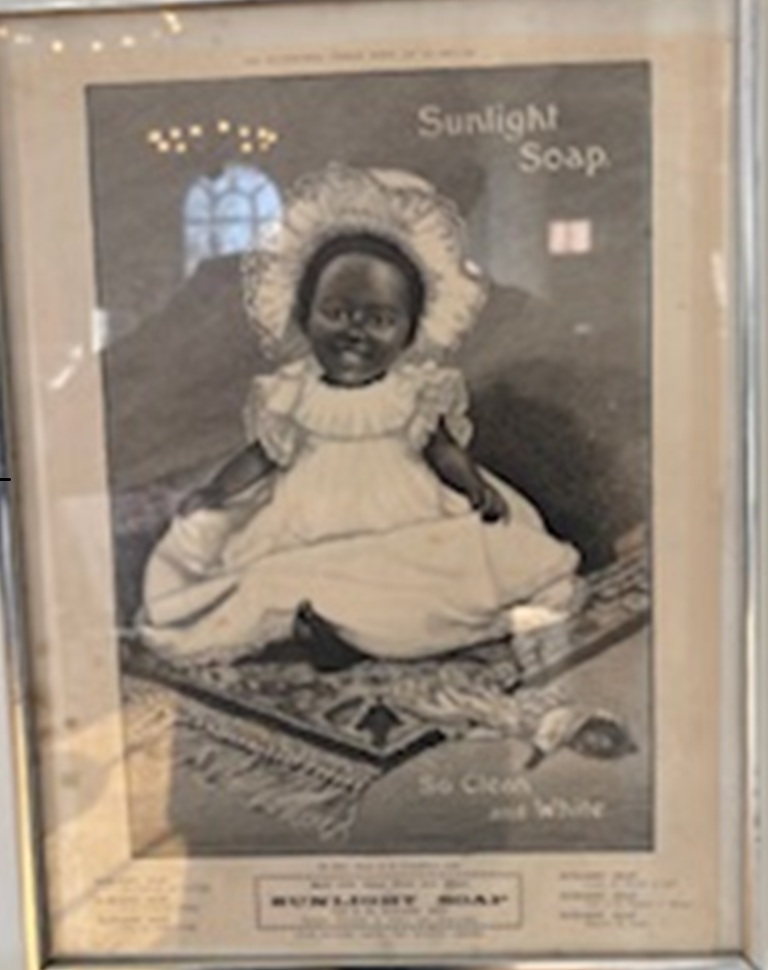
The Mayor’s background in publishing and corporate America informs his critical eye for misshapen Black identity. His collection comprises advertisements from newspapers and magazines, prompting important questions about representation. He points to the absence of Black images and characters in mainstream catalogs and media, except for stereotypical caricatures when they did appear.
His compilation of eight different versions of the “Little Black Sambo” is a case study in how representation can be distorted or corrupted. He points out that the original 1899 London edition of the children’s book by Scottish author Helen Bannerman was actually set in India, centering on a South Indian boy who outwits four tigers. In Bannerman’s text, the main character is depicted as clever, brave, and resourceful. However, the illustrations that accompanied the book used exaggerated characteristics such as bright red lips and wide white eyes, echoing the “picaninny” caricature that was prevalent in minstrel shows of the era. The character’s transition into an overtly racist trope solidified when the book was published the following year in the United States. American illustrators disregarded the Indian backdrop and reimagined Sambo as a simple-minded Black child living in the Jim Crow-era South. The name Sambo was already a common racial slur for a submissive Black man. Modern retellings like The Story of Little Babaji have sought to reclaim the narrative by using Indian names and non-caricatured illustrations.
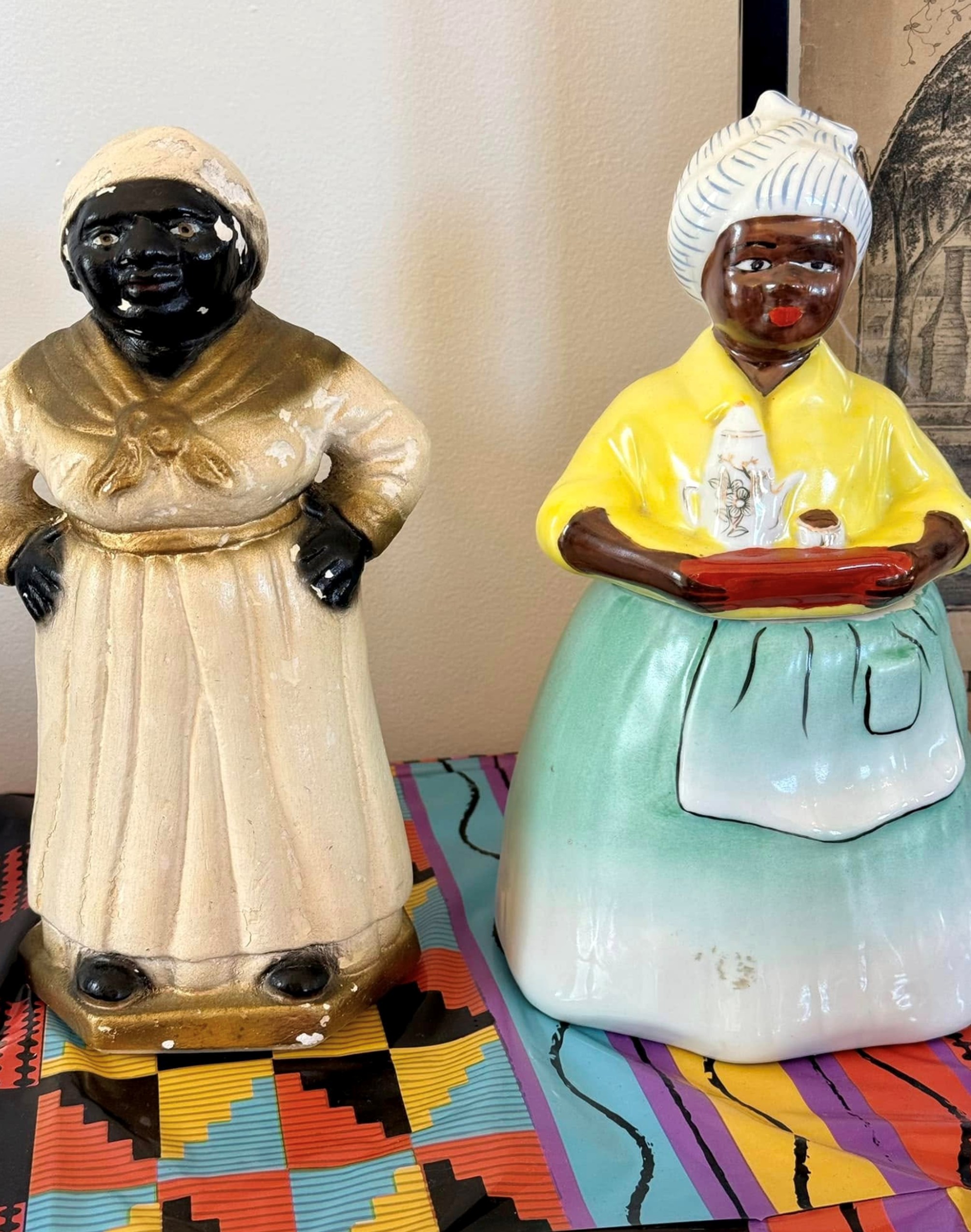
Another racial trope Mayor Green highlights is Aunt Jemima, a figure used to romanticize the Old South and market the Pearl Milling Company’s pre-mixed pancake flour. Green describes the archetype vividly as a woman with a size 30 body frame, apron tied high around her waist, and a bonnet on her head, speaking in a high, shrill Southern accent. He draws a provocative comparison to Aunt Bee from “The Andy Griffith Show” and “Mayberry R.F.D.,” pointing out the racial divide in how roles were cast. While white actresses played the loveable homemaker, Black actresses were confined to the minstrel-inspired “Mammy” caricature. Donning a red bandana and apron, Aunt Jemima illustrated the separation between a homemaker and a servant narrative, masking the harsh realities of post-Civil War life with plantation nostalgia.
The Mayor’s collection spotlights Nancy Green, a formerly enslaved woman from Kentucky, who portrayed the real-life Aunt Jemima. In 1890, the R.T. Davis Milling Co., which purchased the original Pearl Milling Company, hired Green to demonstrate the mix by flipping pancakes at the 1893 World’s Columbian Exposition in Chicago. Her affable persona and cooking skills earned her a lifetime contract with the company. Green portrayed Aunt Jemima until her death in 1923. The character eventually evolved from the kerchief-wearing “mammy” caricature to a more modern depiction, with various actresses assuming the role in later decades, before the image and name were retired in 2021 (returning to the Pearl Milling Company brand name).
As visitors explore this profound African-American Memorabilia Collection at the Lyceum, they are reminded that understanding and honoring Black history is not just about looking back, notes Mayor Green; it is essential to shaping a more inclusive and truthful American narrative for generations to come.


