Angels in the Neighborhood at the Zimmerli Art Museum





The moment a visitor enters the main gallery at the Zimmerli Art Museum, she is engulfed by a poignant, nostalgic feeling, a reminder of all that has been lost in our digital era: when community members of all generations gathered on benches, shared stories, argued over politics. Mothers pushed babies in carriages and children played on tricycles. People opened their windows and leaned out to greet the world. Colorful garments strung on a clothesline billowed in the breeze.
Allan Rohan Crite: Neighborhood, which originated at Boston’s Isabella Stuart Gardner Museum, is a visual journey into a lost world. North Plainfield, New Jersey-born artist Crite’s vibrant paintings from the 1930s and 1940s celebrate neighborhood, community, and religion, which, at least as conveyed here, seem to all come from the same place.
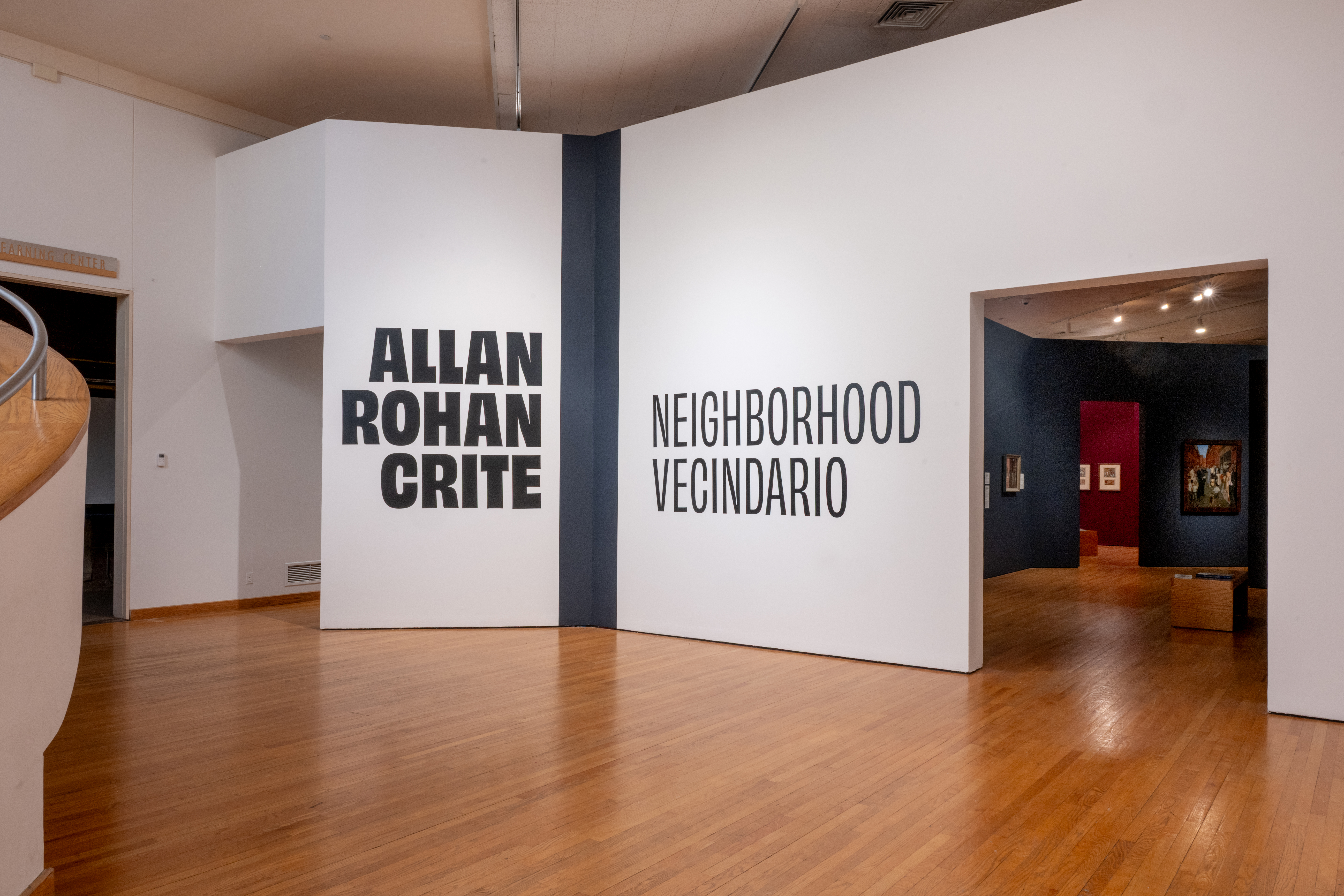
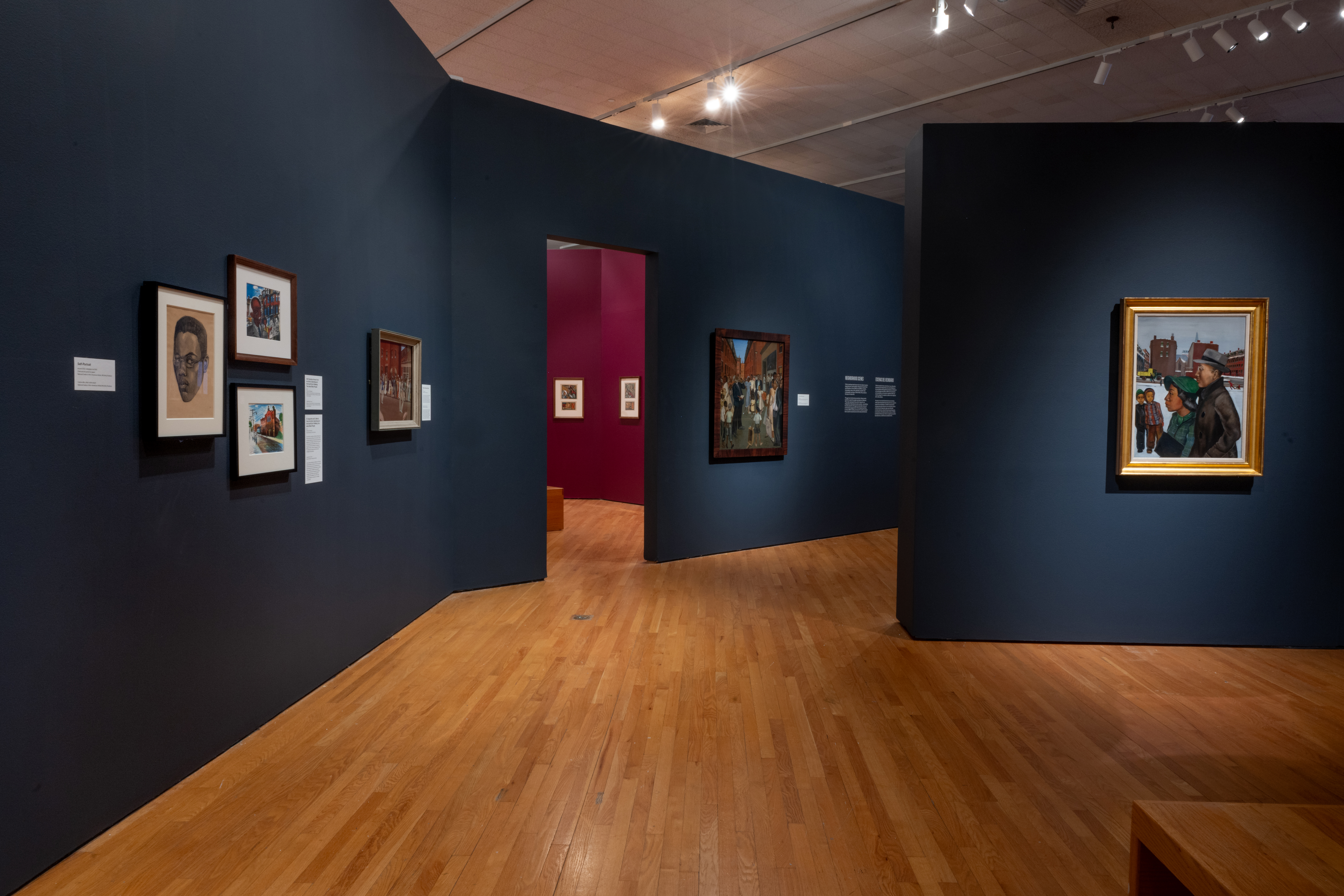
I’m not sure if it’s to protect the paintings – many of which are on paper – or to amplify the sense of neighborhood, but the lighting in the gallery gives a warm and comforting glow. The exhibition begins with a set of lithographs, “Settling the World’s Problems.” A group of African-American men sits on benches, possibly in disagreement over the state of the world, or maybe just to expound. A group of children and their mothers share a bench nearby, seemingly oblivious to the philosophers absorbed in their talk. One young boy looks on, as if anticipating his future.
The men, one with a pipe, another with a cane, wear suits, top hats, and suspenders. They are the council of wise ones, the true congress of people. The scene is further articulated in a large oil painting, where the conversation is at the center of the neighborhood. Crite (1910-2007) documented the multicultural, multiracial, and multigenerational communities as well as historic social and economic changes that transformed the nation in the latter half of the 20th century.
These men on the bench, with graying hair, have seen it all. If only we could tune into their conversation, we might find clues to solving the problems of today.
Crite was a storyteller and cultural historian who chronicled the everyday lives of his friends and neighbors. Although he painted the area near his home in Boston, these scenes could easily be in New Brunswick, Trenton, or Jersey City, with their red brick buildings, golden light shining from the fenestration, windows into the soul of a city. The warm colors resonate in the cold winter light.
While those in the Garden State might not be familiar with Crite, he is celebrated in Boston, where a square has been named for him. As early as 1935, his work was exhibited at the Museum of Modern Art in New York and the Corcoran Gallery in Washington, D.C.
“Crite gifted the art world with iconic imagery that spans much of the 20th century, but only recently has he gained recognition in a broader art-historical context,” says Zimmerli Director Maura Reilly.
Crite studied at Boston University, the Massachusetts School of Art, the Boston Museum of Fine Arts School, and Harvard University, where he earned a bachelor’s degree. His mother, who had attended Harvard and took Alan to museums in his boyhood, grooming his appreciation for art, had to clean apartments and office buildings to pay for his schooling.
Later, he worked as a draughtsman and technical illustrator at the Charlestown Navy Yard, which provided an income as he pursued his career as an artist. Some of those illustrations are included in the exhibition, and they are certainly works of art. Crite uses the same illustration style to portray commuters on a train or security officers screening workers for identification – a scene very relatable today.
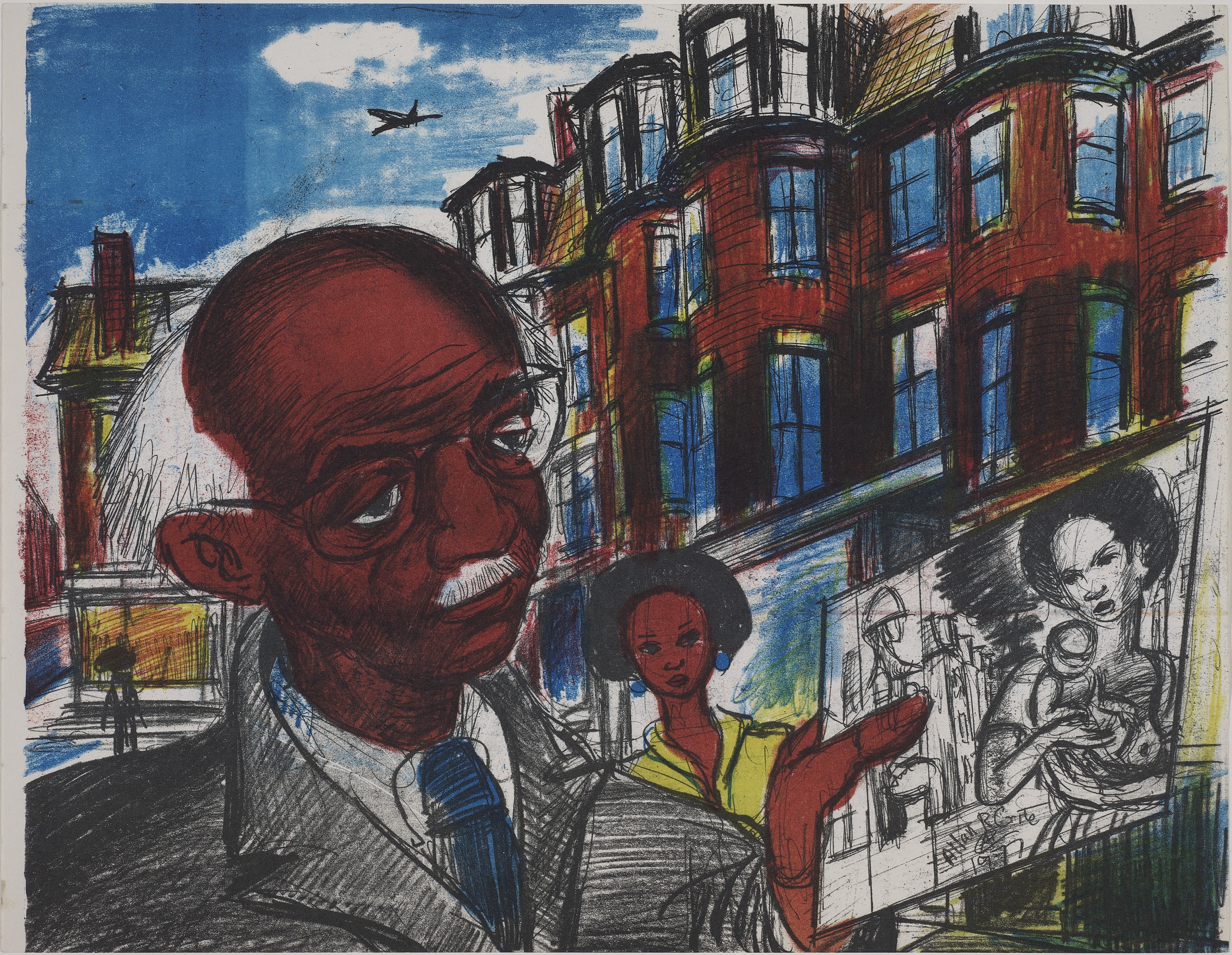
Living through both world wars, the depression, the Civil Rights Movement, and the Women’s Rights Movement, Crite was progressive in politics. He published dozens of handbound books on his home printing press, often wore a trenchcoat, always carried a sketchbook, and was known to have a sweet tooth, according to the lavish catalog published by Princeton University Press. He held salons for emerging artists, whom he mentored, and gatherings in his home where Black history and culture, spirituality, fine art, and the role of artists in advocating for education were discussed. He was considered generous and optimistic by those who recollect their friendships with him in the catalog.
During the Depression years and into the 1940s, when many African-American artists were engaged in mural projects, Crite developed his series of neighborhood paintings inspired by the predominantly African-American Roxbury district. The Smithsonian Institute attributes the following to Crite: that he sought to show viewers the "real Negro" as opposed to the "Harlem" or "jazz Negro," which was created by white people.
“My intention … was to … present [Black people] in an ordinary light, persons enjoying the usual pleasures of life with its mixtures of both sorrow and joys . . . I was an artist-reporter, recording what I saw."
The people in Crite’s paintings are stylishly dressed. In “Columbus Avenue,” we see a fancy department store, “the Hi Hat,” and beautiful women in coats with fur collars. Men wear top hats and overcoats over suits, and the children are as sartorially splendid as their parents.
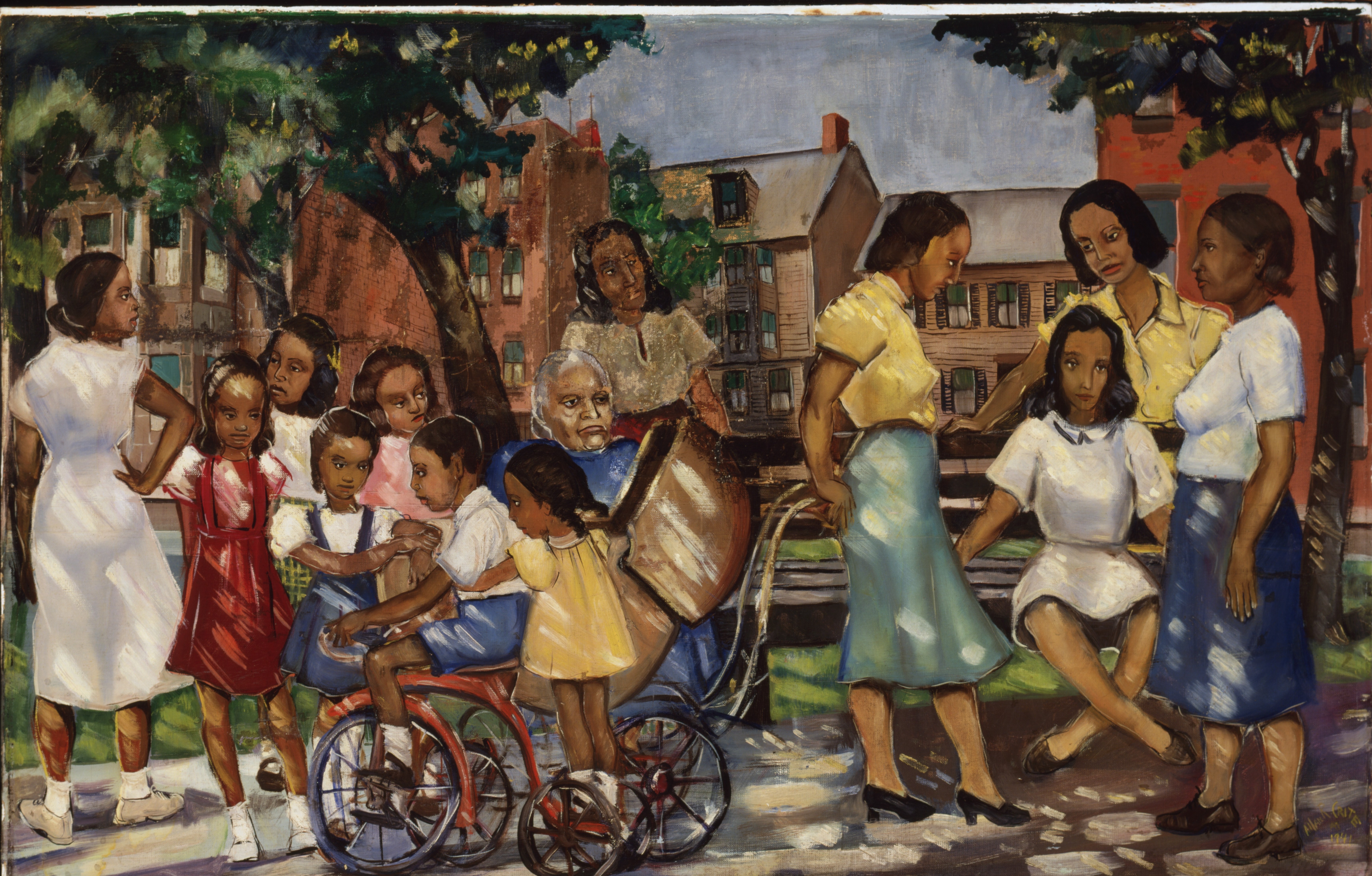
So many of the paintings tell stories. In dappled sunlight, a woman on a bench has just told three generations of women and girls about some personal tragedy or revelation. In “Come On, Gramps,” a young child in a snowsuit pulls an older man along an icy street. In “Fruit and Snow: From My Window at 2 Dilworth Street,” a colander filled with citrus fruit is perched on a radiator, framing a view out the window of three figures trudging through snow. It contrasts the warmth of home with the cold outside, where hopefully those figures are heading to their own warm homes. (Crite lived at 2 Dilworth for 46 years, until the street was demolished in the name of “urban renewal.”)
Crite considered urban “renewal” to be urban removal — the gentrification that displaced long-established Black and multicultural neighborhoods. He painted the heavy machinery demolishing buildings as if the machines themselves were characters.
In “And the Lord Said,” a community of rapt listeners gathers inside a shoe repair shop to listen to a cobbler read from a bible.
Crite shows religion as not just something that happens in a church but in everyday life – “neighborhood liturgy,” as the exhibition catalog calls it. “Our Lady of the Elevated Station” has a Black Madonna kissing her baby’s head as commuters pass by, oblivious. It is reminiscent of the Joan Osborne song: “What if God was one of us/Just a slob like one of us/Just a stranger on the bus/Tryna make his way home…”
From the catalog’s forward: “In a moment of national polarization and division, Crite’s focus on community is particularly important to share.”


