Soulful Musical Retelling of the Christmas Story 'Black Nativity' Returns to Count Basie Center for 10th Anniversary





The Christmas musical “Black Nativity” is a beloved holiday tradition in many communities, with productions staged across the United States and toured worldwide for over 60 years since its inception. Written by renowned poet and playwright Langston Hughes, the Gospel-inspired play reimagines the journey of Mary and Joseph to Bethlehem, culminating in the sacred birth of Jesus. This powerful narrative is brought to life through a dynamic blend of gospel music, spiritual hymns, vivid dance and poetry, while weaving in the Black experience with the enduring themes of love, joy, hope, and cultural liberation.
The Dunbar Repertory Company will stage “Black Nativity” at the Count Basie Center for the Arts’ Hackensack Meridian Health Theatre in Red Bank, New Jersey, on December 28, 2025, at 4 PM. This performance marks the 10th anniversary of the company's bi-annual production of “Black Nativity” at Count Basie Center, led by musical director and choral arranger Gwen Moten, an esteemed opera singer, performer, and Newark educator, and directed by veteran actor Darrell Lawrence Willis, Sr., Dunbar Repertory Company’s producing artistic director.
The latest rendition of “Black Nativity” features a predominantly Black cast, assembling a total of 48 singers, actors, dancers, and musicians, including the three-piece jazz combo that features Berwin Dexter Allgood on keyboards, Craig Capers-Redmond on drums and Arthur Graham on bass. Dunbar Repertory’s anniversary performance not only signifies the company’s commitment to celebrating Black culture but also affirms the enduring legacy of Hughes’ masterpiece as a vital part of America’s holiday celebrations.
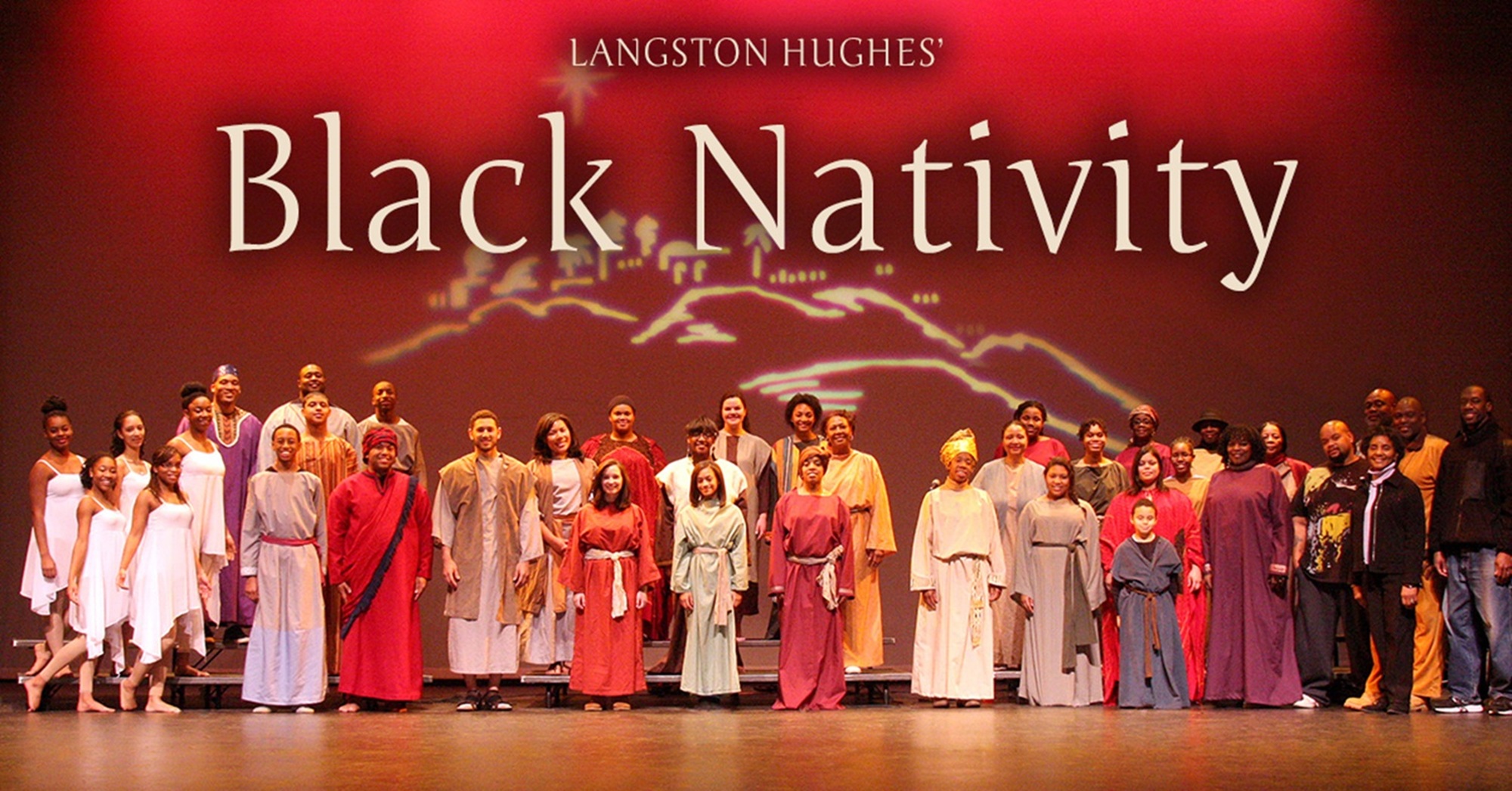
Based on the Gospel of St. Luke, “Black Nativity” incorporates Hughes’ powerful poetry and gospel arrangements of traditional carols alongside original songs. The show transitions from the familiar biblical narrative to reflect the history, struggles, and spiritual resilience of Black Americans, including the era of enslaved Africans and the rich traditions that emerged from their experiences. The show promises to be an uplifting and culturally rich performance.
When “Black Nativity” debuted on Broadway in 1961, it was among the first plays authored by a Black artist to grace the stage. Hughes’ vision was to merge the Christmas narrative with the Black experience, infusing the production with blues, soul, jazz, and traditional spirituals, and employing griot-style narration to deepen its emotional resonance.
The original play offers a flexible “jumping-off point” for directors and choreographers which allows for creative freedom. Willis recounts that over the years, regional productions have added their own spin and elements, whether that means blending blues or hip hop music with traditional gospel songs and hymns or showcasing a mix of cultural dance styles like Step and African dance to bring the Nativity story to life. Willis adds that some renditions feature as many as 20 dancers alongside actors portraying Mary, Joseph, a narrator, shepherds, angels and wisemen. Other productions even play around with costumes by merging the traditional dress of Bethlehem from biblical times with African garments or modern outfits.
Dunbar Repertory has been bringing “Black Nativity” to Count Basie around the holidays since 2010, making it a long-standing tradition for Monmouth County. Willis, who was an adjunct professor of theater at Essex County College at the time, was instrumental in the production from the onset. It was Numa Saisselin, then CEO of Count Basie Center for the Arts, who approached Willis with a vision for the holiday season. He sought to create a festive gathering that would encourage the local Black community to come together in celebration, rather than spending the holidays shopping in malls. Saisselin wanted to foster unity and provide a meaningful alternative by inviting people into the theater to experience the powerful story and cultural significance of “Black Nativity,” recalls Willis, who also serves as a Count Basie Center trustee.

The show’s popularity has steadily increased, growing from an inaugural performance with roughly 600 people in attendance to a production that now draws more than 1000 attendees to a single performance, notes Willis. He boasts that audience members travel from across New Jersey, New York, and Pennsylvania, reflecting the wide regional appeal and heritage-based relevance of “Black Nativity.”
Since joining forces on the show’s very first production at the Count Basie Center, Willis and Moten have taken audiences on a journey with Act One unfolding in a traditional Bethlehem setting and Act Two transforming into a spirited Southern Baptist church revival. To uplift everyone’s spirits, especially younger crowds, the duo chose to close out this year’s show with a gospel-infused take on the Stevie Wonder song “Higher Ground.”
Willis fell in love with the theater during his youth, initially through his involvement in high school productions and his further studies in higher education, earning a Bachelor of Arts in Communications and Theatre Arts from Susquehanna University and Master of Arts in Theatre Studies from Montclair State University. He honed his craft through extensive studies at Rutgers University’s Mason Gross School of the Arts, learning from distinguished educators and artists, including Harold Scott, Avery Brooks, William Esper, and Glenda Dickerson.
Willis, together with Ramon James Morris, another native of Long Branch, New Jersey, founded
the Dunbar Repertory Company back in 1987. The company began its journey on the Brookdale Community College campus. Its core mission to promote cultural diversity and celebrate Black heritage is carried out through a variety of plays, staged readings, and educational outreach initiatives, all designed to foster appreciation and understanding of Black culture within the broader community.
Since the company’s initial involvement, “Black Nativity” has indeed served as a special gathering for families, with audiences sometimes spanning up to four generations attending a single production together, Willis points out. He emphasizes the theatrical experience fosters togetherness and strengthens family bonds, making it more than just a performance—“it’s an annual tradition that brings family members closer during the holiday season,” he adds.
Willis also sees the healing power of “Black Nativity” during the holidays. “It is a blessing, (even serving) as a sign of hope in the world for many people, especially those who may struggle with their mental health during the holiday season,” says Willis. He explains, “Christmas time can be a very dark period for some people, (such as those) dealing with the loss of a loved one, (while) others may be (grappling) with financial hardships.”
Willis believes that attending a performance of “Black Nativity” can offer comfort and help people feel a little bit better about their current circumstances. The play’s uplifting message and sense of community create a supportive environment, making it an important tradition for those who need encouragement and reassurance during this time of year. “I hope that audiences will get a sense of joy, a sense of unity and a sense of well-being from seeing the play,” Willis says.


