'A Good Farmer' Graces South Camden Theatre Company





Family farms and immigrant farm workers have long shared a close, interdependent relationship that is central to American agriculture. Many family-owned farms, especially those growing labor-intensive crops like fruits and vegetables, rely on immigrant workers to plant, tend, and harvest their fields—tasks that require long hours, physical stamina, and specialized skill. For farmers, this labor is essential to keeping their operations viable in the face of thin profit margins and global competition. For immigrant workers, these jobs, though often difficult and underpaid, provide a path to support their families and sometimes to pursue their own stake in the American dream. This relationship is not without tension, as issues of wages, labor rights, and immigration policy shape the lives of both farmers and workers, but at its core, it represents a partnership that sustains both rural communities and the nation’s food supply.
I've read elsewhere that this show began in your mind originally in a New York Times piece from 2006?
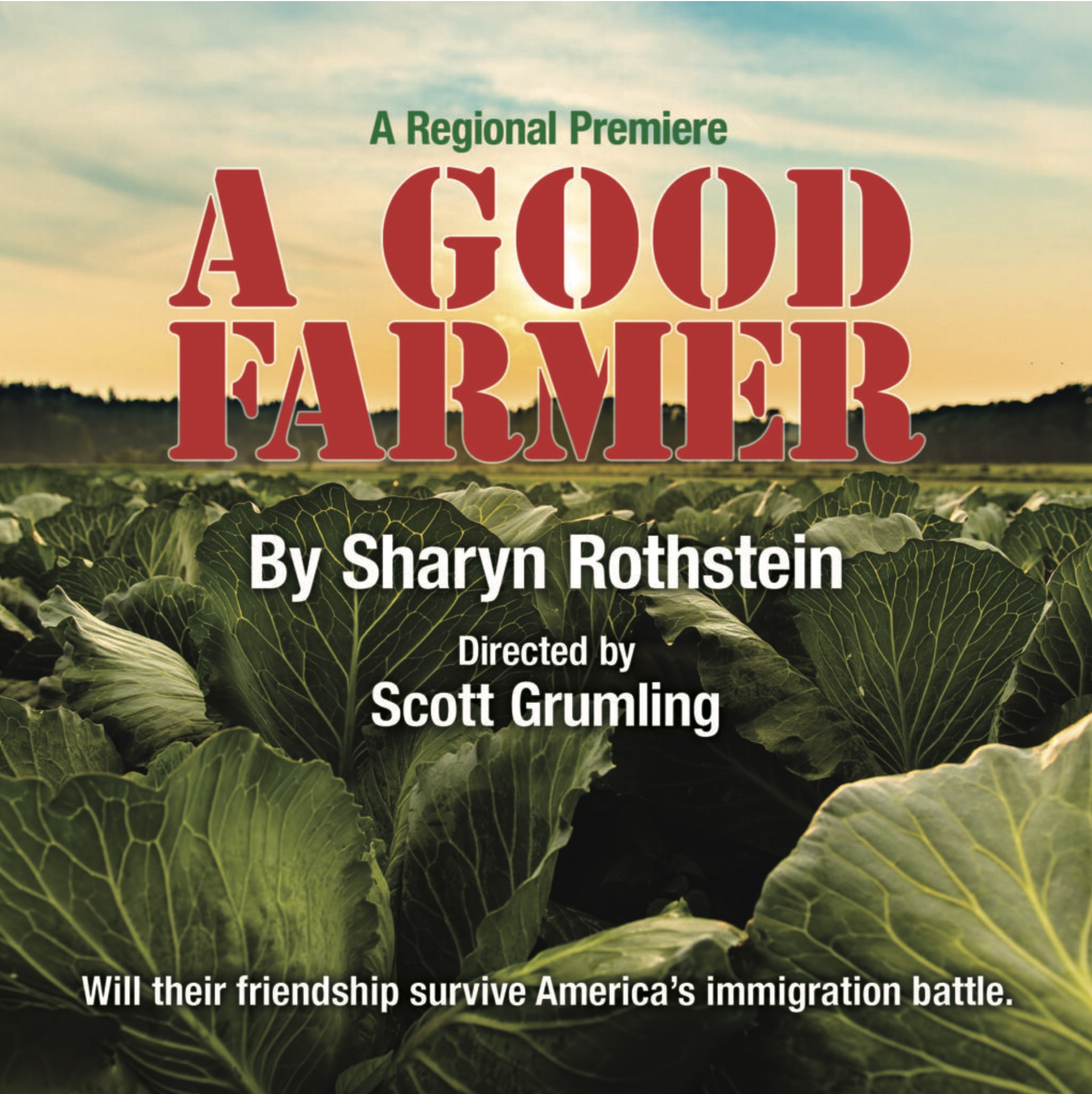
Sharyn Rothstein, playwright: "I was inspired by an article I read in the New York Times about this town in upstate New York, a very rural town, farming is its lifeblood, and there had been an increase in immigration raids, and it was kind of tearing the town apart. And it's an interesting town as well, because there's a major immigration presence, and a major ICE detention facility is right near it. And so I went up to the town to do some research, and it was just, you know, it's a really, tiny little town. Literally a 'one stop sign' town. What inspired me in the article was a sign as you drive into town that says, 'Welcome to Elba, population just right,' which is obviously cute, but maybe not so cute, depending on your point of view. That grabbed my imagination because I thought, 'What does that mean if you think the population of your town is just right?' I spent some time in Batavia, where the immigration detention facility is located, and wrote this play. It was produced in an off-off-Broadway theater in New York and did pretty well. A few years later, it got produced in 2018 in another theater in New Jersey. I'm gratified that the piece still has resonance, and I think it does have even more now, as the issues around immigration and enforcement have become so much more divisive and extreme."
It's probably easy to get lost in the current politics, but what is the driving force of the show?
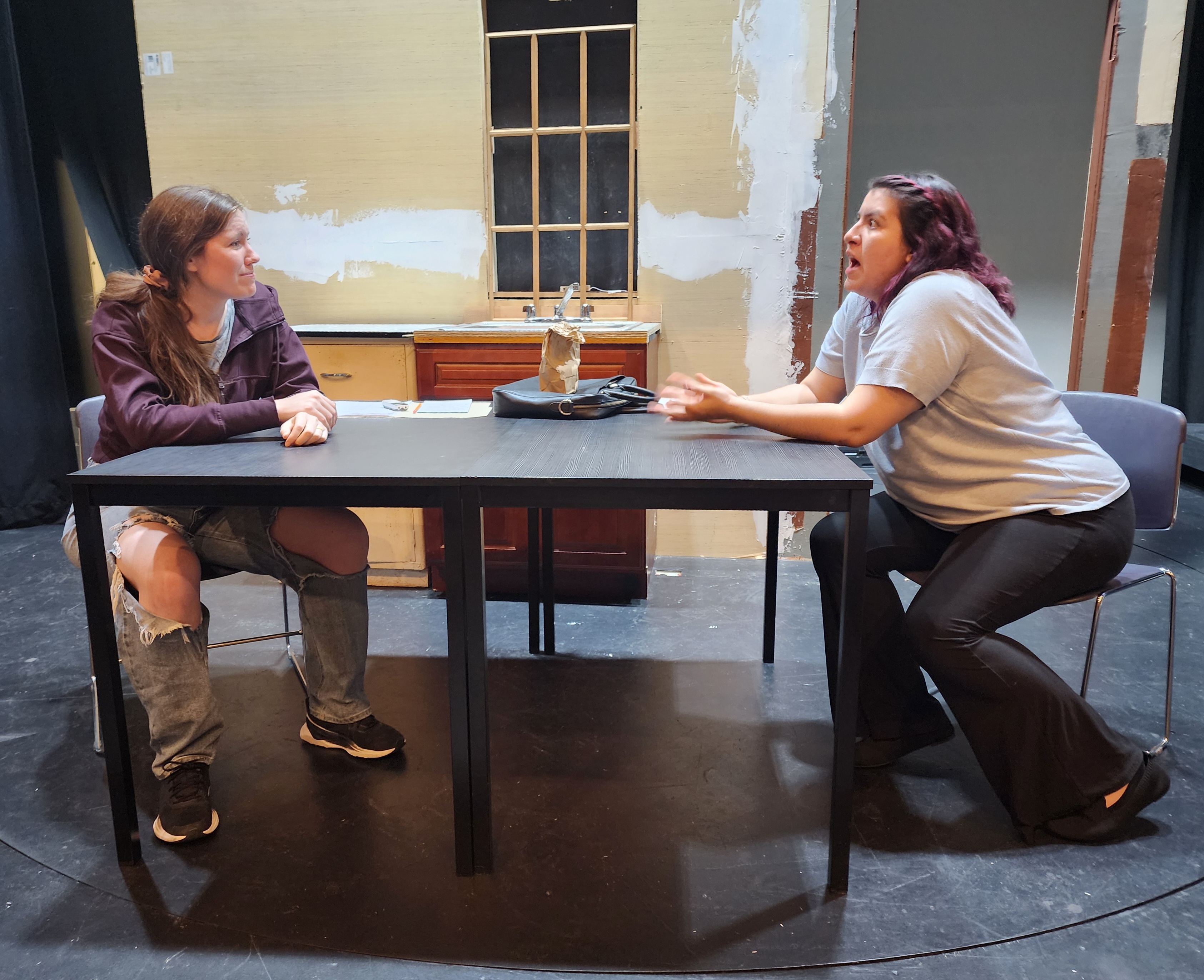
Sharyn: "The heart of the play has always been the two women at the center of the play, Bonnie, who owns a farm, and Carla, who was an undocumented farm worker, who has worked on Bonnie's farm for a very long time. And the two of them have become quite close. And now, probably more than when I wrote the play, we are even more aware of all the differences between these two women and different levels of privilege, entitlement, and citizenship. It's much more in the national discourse than when I was working on the play. But I still think the heart of the play is two people who are so different, who come from such different backgrounds, who have found family in each other. And to that extent, there's a hopefulness about the play. We can love each other, and we can connect no matter how different the place where we start from is."
Scott, I read somewhere that you didn’t think this show (or perhaps Sharyn’s work in general) was particularly political?
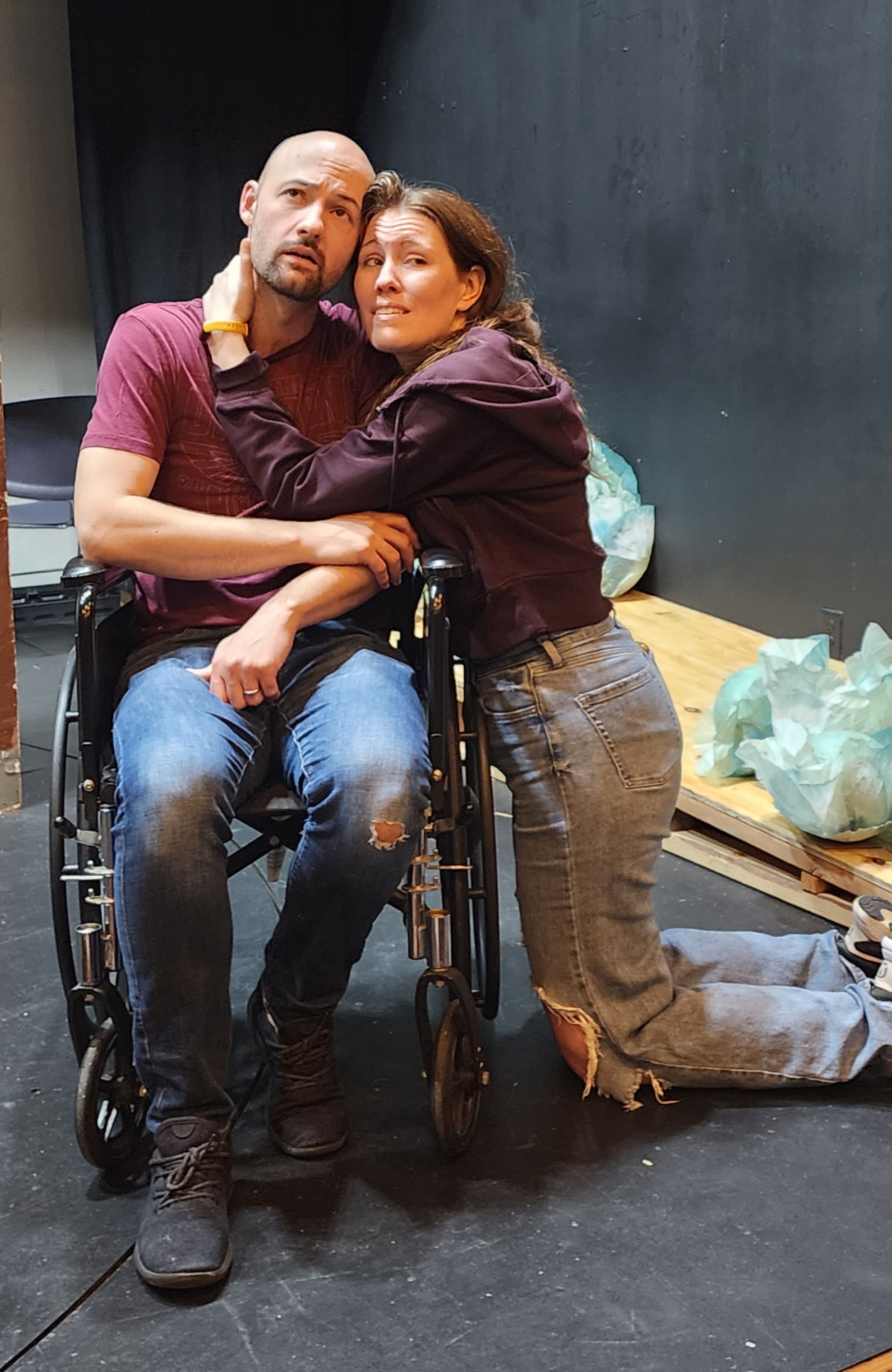
Scott Grumling, Director: "There is no slanted agenda in the play. Sharyn writes about real people actually experiencing events, so that rather than just someone reading articles about what's going on in the world, you can distance yourself because you hear about it. Still, when you're in live theater, I really feel it's putting that human face on top of the issue. So, I don't mean to say that what she writes isn't potentially political. She leaves it up to the audience to decide what they've seen and how they respond to that. We are showing the messiness of the situation and how the particular individuals are honestly affected by it. It provides more humanity to the piece, and also gives the audience something to think about in that regard, because they're seeing live actors in front of them play this out on the stage."
How do you approach this as a director with these folks? How do you approach? Because no doubt they're bringing feelings in from the outside world?
Scott: "I think it has been very beneficial for me to have the acting experience because I know what the actors are going through. I've been in their shoes before. I feel that it's the director's job to set the world of the play and give specific boundaries for where we're going to play in that space and then give the actors the freedom to explore within that space, keeping within the overall vision of the show and hoping that we can come, you know, meld and collaborate to find as many moments as we can in there that are interesting, that are maybe even unexpected, and to work with the actors in those regards so that we have what we feel as a truly collaborative process and product at the end, which creates a powerful sense of ensemble."
People are talking about empathy in strange (to me) ways these days. What role does empathy play in your work?
Sharyn: “I don't think I'm the first person to say this, but part of what makes theater so great is that it is an empathy-making machine. And when you experience someone else's story in concert with other living human beings, all experiencing it at the same time, it makes you consider the world from different viewpoints. It's a part of what I love about theater. Dramatically, what I'm interested in investigating is people who are good people, who are carrying people, who love other people, and are put in difficult positions, and how they navigate that. You know, I don't believe in writing perfect characters, because I don't think there are perfect people. But I do always try to write with a lot of heart and humor because, certainly in my life, that is the only thing that gets you through tough times. My characters as well. The best plays often give you something to laugh at, because that's a gateway into sharing a different person's point of view and experiencing someone else's journey.”
Anything we didn’t cover that you would have liked to?
Sharyn: "I think they (SCTC) are a wonderful theater company, an incredible diamond in the rough for this community and for New Jersey in general. This is a play about immigration at a difficult time. That shows such bravery. I know that they're going to do it with all of the heart and humor that they brought to my other play they produced. I wanted to make sure that everyone knows what a wonder it is to have this theater company doing this work in their community."
Playwright Sharon Rothstein will be attending the matinee performance and participating in a talk back event after the 2 p.m. show on Sunday, September 14th.


