Classic Fairytale 'Cinderella' Gets a Latin Twist at Growing Stage





Cinderelly, Cinderelly. Night and day, it's Cinderelly. - Disney’s Cinderella (1950)
How many adaptations of Cinderella are there? There are definitely several hundred, but the official number could be well over a thousand. The tale of the little cinder girl has been told over and over throughout history, endlessly, adapted to fit new generations with each iteration. We’ve moved seamlessly from Charles Perrault to the Brothers Grimm to Rodgers and Hammerstein to Drew Barrymore to Hillary Duff to Selena Gomez to Lily James. If you understood each reference, you’re going to love what’s coming next!
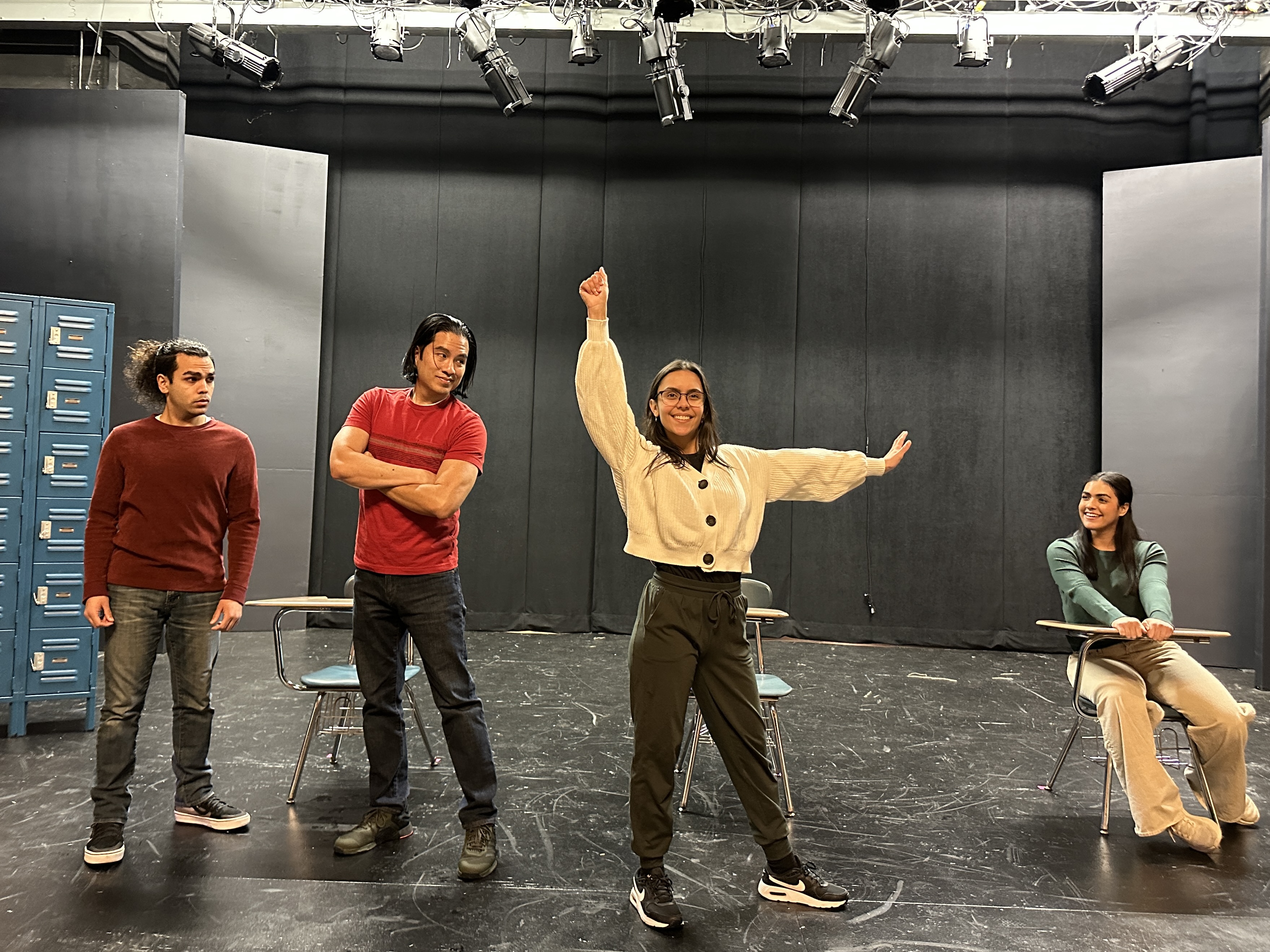
The Growing Stage is producing yet another unique spin on the classic tale, this time with a bit of Latin flavor. If you like your fairytales bilingual with a bit of sazón, you’ll want to snag your tickets right away. Directed by Danny Campos with book and lyrics written by Karen Zacarias and music by Deborah Wicks La Puma, “Cinderella, A Salsa Fairytale” poses the question:
What will happen to Cinderella at the ball... game? That’s the surprising climactic moment in this contemporary musical, which delightfully turns the classic fairy tale on its head by telling the story from both Cinderella’s and the “stepsister’s” perspectives. Cinderella, a newcomer from Puerto Rico, comes to visit her “stepsister,” Rosa, in the United States. The catch? Cinderella speaks only Spanish, and Rosa speaks only English. Will these two girls find a way to understand one another at the (basket)-ball game? Featuring a fairy godfather and other delightful twists, Cinderella: A Salsa Fairy Tale crosses language and gender barriers while weaving a subtle lesson in empathy, sportsmanship, and respect. Families will be cheering in their seats.
Reimagining Cinderella with a bilingual twist

Cenicienta (the Spanish translation of Cinderella) and her stepsister Rosa are at the center of this story, with each young girl representing their cultural background with a specific style of music. Cenicienta sings to salsa beats, whereas Rosa represents urban hip-hop. Originally commissioned as a bilingual piece by Imagination Stage in Bethesda, Maryland, over twenty years ago, Deborah Wicks La Puma confirms that the authors revisited the piece in order to update its relevance to some degree. They refer to it as the “2025 Revival,” and yet, Wicks La Puma says, “It was kind of shocking to see how relevant all of these issues still are, as we went back and looked at the piece.”
She adds that her collaborator, Karen Zacarias, brought her own immigrant experience to the material. That understanding of being the “new kid” feeling othered by circumstance led them to choose Cinderella as a relatable story for young audiences. Wicks La Puma explains the conflict between the two girls of similar yet starkly different backgrounds.
“In considering that sense of someone coming from another place, being the new kid, but also adding that language barrier, which is something that Karen had been through, we thought that Puerto Rico would be an interesting choice. Of course, Puerto Rico is part of the United States [its residents are citizens of the U.S.A] and so there is an interesting other layer to that. We, [the mainland United States] are connected with Puerto Rico, but most people don't think about it, and yet that language barrier can be huge.”
Designed for Young Audiences, Loved by All

Whether you speak Spanish or not, the show is written to be easily understood by all. Some songs are in Spanish, but the joy of live theater is that body language and tone can tell you all that you need to know. The message transcends language, and though the piece was commissioned for upper elementary school students, it is a fun and sassy musical journey for the whole family.
Director Danny Campos adds that “When directing a show like this, my first priority is honoring the words and music on the page and bringing them fully to life on our stage. From there, it’s about creating something the audience can connect to and see themselves in.
I want the storytelling to be accessible without ever being oversimplified, focusing on clarity, honesty, and emotional connection—especially for young audiences—so the story feels alive and stays with them long after they leave our theatre.”
Deborah says that she hopes audiences will "leave the theater with a newfound pride in who they are and stop comparing themselves to, and trying to measure their value, against others."
The show runs weekends from February 6th to February 15th with a sensory friendly performance on February 8th and will feature Natalia Isabel Lugo (TGS debut) as Cinderella; Diana Maldonado (TGS debut) as Rosa; Tyler Brian (Don't Let the Pigeon Drive the Bus, Arthur & Friends) as Padrino; and Jay Michael Pumarada (Arthur & Friends) as Joey. Tickets are available at growingstage.com.


